
Sand Casting Stainless Steel Parts: Complete Guide to Design, Process, and Applications
Welcome to My Blog!
I’m thrilled to have you here! Before we dive into the content, I’d love for you to join me on my social media platforms. It’s where I share extra insights, connect with our amazing community, and keep you updated on the latest news. Here’s how you can stay connected:
📘 Facebook: Shanghai Leierwo Industry Trade Co., Ltd.
Now, let’s embark on this journey together! I hope you find the content here not only insightful but also inspiring and valuable. Let’s get started!
Table of Contents
Stainless steel components are essential in modern engineering—from chemical processing plants to marine equipment and mining machinery. However, manufacturing durable stainless steel parts with complex shapes can be challenging and costly if the wrong production method is chosen.
That is why sand casting stainless steel has remained one of the most widely used metal casting techniques in heavy industry. According to the American Foundry Society, sand casting accounts for over 60% of all metal casting production worldwide, largely due to its flexibility, scalability, and cost efficiency.
For manufacturers, engineers, and procurement managers, understanding how sand casting stainless steel parts are designed, produced, and inspected can significantly improve sourcing decisions and product reliability.
Before diving into the details, here are the key takeaways of this guide:
- Sand casting stainless steel is widely used for producing large, complex, and heavy-duty components.
- The process supports many stainless steel grades including 304, 316, and high-strength alloys.
- Compared with precision casting or machining, sand casting offers lower tooling costs and better scalability for large parts.
- Proper design rules—such as wall thickness and draft angles—help prevent defects and improve quality.
- Stainless steel castings are commonly used in valves, pumps, mining equipment, marine hardware, and industrial machinery.
- Quality control techniques such as spectrographic analysis and ultrasonic inspection ensure reliability and safety.
Understanding Sand Casting Stainless Steel Parts
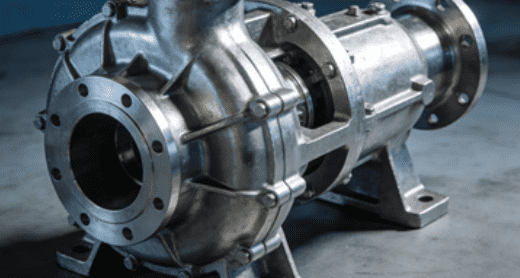
Sand casting stainless steel parts are metal components produced by pouring molten stainless steel into specially prepared sand molds.
Once the metal solidifies, the sand mold is broken away to reveal the final component shape. This technique allows manufacturers to produce customized and complex stainless steel parts with relatively low tooling investment.
Key Concept: What Is Sand Casting Stainless Steel?
Sand casting stainless steel is a metal casting method that uses reusable patterns and disposable sand molds to create stainless steel components.
The sand mixture usually contains silica sand, clay binders, and water to maintain mold strength. After pouring molten metal into the cavity, the casting cools and forms the final part geometry.
Key Concept: Why Stainless Steel Is Ideal for Sand Casting
Stainless steel contains at least 10.5% chromium, which forms a protective oxide layer that prevents corrosion.
This property makes stainless steel suitable for equipment operating in chemical, marine, or high-temperature environments.
Key Concept: Typical Industries Using Stainless Steel Castings
Many heavy industries rely on stainless steel cast components because of their durability.
Examples include:
- Oil and gas equipment
- Mining machinery
- Food processing systems
- Industrial pump and valve manufacturing
- Marine engineering and offshore platforms
These sectors often require parts capable of handling pressure, corrosion, and mechanical stress simultaneously.
The Sand Casting Stainless Steel Process
Producing high-quality stainless steel castings requires several carefully controlled manufacturing stages.
Pattern Design and Manufacturing
A pattern represents the shape of the final casting and is used to create the mold cavity.
Patterns are often made from:
- Wood (low production runs)
- Plastic (medium runs)
- Metal (high-volume production)
Pattern design includes allowances for metal shrinkage, machining, and draft angles.
Mold Preparation
The mold is prepared by packing sand around the pattern in a mold box.
Once the pattern is removed, the cavity left behind replicates the shape of the desired casting.
Metal Melting
Stainless steel is melted in high-temperature furnaces such as:
- Induction furnaces
- Electric arc furnaces
Typical melting temperatures for stainless steel alloys range from 1450°C to 1550°C.
Pouring and Solidification
Molten stainless steel is poured into the sand mold through a gating system.
Controlled cooling ensures the metal solidifies properly and reduces internal defects.
Shakeout and Cleaning
After solidification, the mold is broken apart to retrieve the casting.
Cleaning operations include:
- Shot blasting
- Grinding
- Removing gates and risers
Secondary Processing
Depending on the application, cast parts may undergo additional processes:
- Heat treatment
- Precision machining
- Surface finishing
Common Stainless Steel Alloys Used in Sand Casting
Different stainless steel grades are selected depending on mechanical requirements and environmental conditions.
| Stainless Steel Grade | Key Properties | Typical Applications |
|---|---|---|
| 304 | Excellent corrosion resistance | Food equipment, industrial fittings |
| 316 | High resistance to salt and chemicals | Marine parts, chemical pumps |
| 410 | High strength and wear resistance | Valve components |
| 17-4PH | Precipitation hardening alloy | Aerospace and heavy machinery |
Among these, 316 stainless steel is particularly popular in marine and chemical industries because of its molybdenum content, which improves corrosion resistance.
Advantages of Sand Casting Stainless Steel Parts
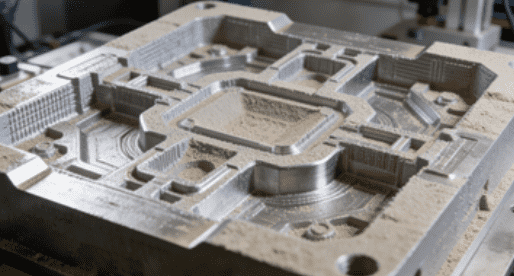
Design Flexibility
One of the biggest advantages of sand casting stainless steel is the ability to create complex internal cavities and intricate shapes.
This flexibility allows engineers to optimize parts for performance without being limited by machining constraints.
Cost Efficiency for Large Components
Compared with other casting methods, sand casting often requires less expensive tooling.
This makes it ideal for:
- Medium production runs
- Custom machinery parts
- Large industrial castings
Strength and Durability
Stainless steel castings provide excellent mechanical properties including:
- High tensile strength
- Good impact resistance
- Strong corrosion protection
These characteristics make them suitable for heavy-duty industrial environments.
Wide Size Range
Sand casting can produce components ranging from small mechanical parts to castings weighing several tons.
Large mining machinery frames and pump housings are often manufactured using this method.
Sand Casting vs Other Stainless Steel Manufacturing Methods
Different production techniques offer different advantages depending on design complexity and production volume.
| Manufacturing Method | Advantages | Limitations | Typical Use |
|---|---|---|---|
| Sand Casting | Flexible design, low tooling cost | Rougher surface finish | Large industrial parts |
| Investment Casting | High precision | Higher tooling cost | Small precision components |
| CNC Machining | Very accurate | High material waste | Prototype parts |
| Forging | Excellent mechanical strength | Limited shape complexity | High-stress components |
Sand Casting vs Investment Casting
Investment casting produces very smooth surfaces and tighter tolerances, but it requires expensive tooling and wax patterns.
For large stainless steel components, sand casting is usually more economical and scalable.
Sand Casting vs Forging
Forged components typically have superior grain structure and strength.
However, forging cannot easily produce complex hollow shapes, which sand casting can achieve.
Engineering Design Guidelines for Stainless Steel Castings
Proper design improves casting quality and reduces manufacturing costs.
Draft Angles
Draft angles allow patterns to be removed without damaging the sand mold.
Typical draft angles range from 1° to 3°.
Uniform Wall Thickness
Maintaining consistent wall thickness prevents uneven cooling and reduces the risk of cracks or distortion.
Fillets and Rounded Corners
Sharp corners concentrate stress and may cause defects.
Rounded fillets improve structural strength and metal flow during casting.
Machining Allowance
Additional material is added to surfaces that require machining after casting.
Typical allowances range from 1.5 mm to 6 mm, depending on part size.
Applications of Sand Casting Stainless Steel Parts
Pump and Valve Components
Pump housings and valve bodies must withstand high pressure and corrosive fluids.
Sand cast stainless steel provides the durability required for these systems.
Mining and Construction Equipment
Mining machinery operates in extremely harsh environments with abrasive materials.
Stainless steel castings offer long service life under these conditions.
Marine Engineering
Ship components and offshore equipment require materials that resist saltwater corrosion.
Stainless steel castings are widely used in marine hardware.
Food and Pharmaceutical Equipment
In sanitary environments, stainless steel provides hygienic and corrosion-resistant surfaces.
Many processing machines rely on stainless steel cast components.
Quality Control in Sand Casting Stainless Steel
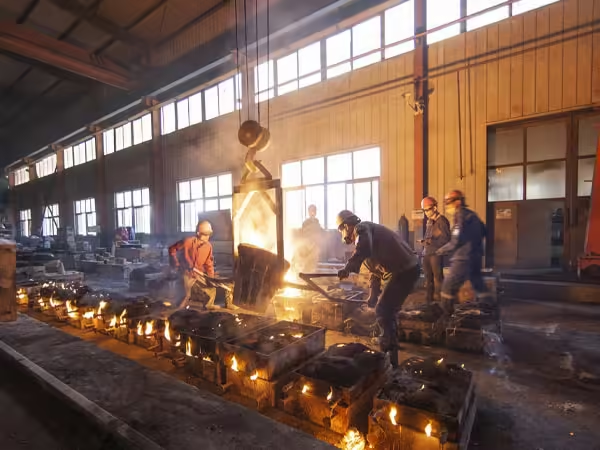
Quality assurance is essential to ensure casting reliability and safety.
Chemical Composition Analysis
Spectrometers are used to verify that the alloy composition meets design specifications.
Non-Destructive Testing
Inspection techniques include:
- Ultrasonic testing
- Radiographic (X-ray) inspection
- Dye penetrant testing
These methods detect internal defects without damaging the casting.
Dimensional Inspection
Precision measuring tools verify that the casting meets required tolerances.
Mechanical Property Testing
Samples may undergo tensile testing or hardness testing to confirm strength and durability.
Modern Innovations in Stainless Steel Sand Casting
Advances in manufacturing technology are improving the efficiency and quality of cast components.
3D Printed Sand Molds
Additive manufacturing allows foundries to produce complex sand molds directly from digital designs.
This reduces pattern costs and shortens development time.
Simulation Software
Casting simulation software predicts issues such as shrinkage, porosity, and metal flow problems before production begins.
This helps engineers optimize designs and improve yield.
Automated Foundry Systems
Modern foundries use automated pouring and molding systems to improve consistency and production speed.
Environmental Considerations in Sand Casting
Sustainability is becoming an important factor in metal manufacturing.
Recyclable Materials
Sand used in molds can often be reclaimed and reused multiple times, reducing waste.
Metal Recycling
Scrap stainless steel from gating systems and defective castings can be remelted and reused.
Energy Efficiency
New induction furnace technologies significantly improve energy efficiency compared with older systems.
Conclusion
Sand casting remains one of the most versatile and cost-effective methods for producing stainless steel components. Its ability to manufacture large, durable, and complex parts makes it essential in industries such as mining, marine engineering, and industrial equipment manufacturing.
By understanding the design principles, alloy options, production processes, and quality control methods involved in sand casting stainless steel, engineers and buyers can make better decisions when sourcing components.
As manufacturing technologies continue to evolve—with innovations like 3D printed molds and digital casting simulations—the future of stainless steel sand casting will likely become even more efficient, precise, and sustainable.
FAQ
What is sand casting stainless steel used for?
Sand casting stainless steel is commonly used to produce industrial components such as valves, pump housings, marine fittings, and heavy machinery parts.
Is sand casting stainless steel strong enough for heavy equipment?
Yes. Stainless steel castings offer high tensile strength and corrosion resistance, making them suitable for demanding applications such as mining and chemical processing.
What are the limitations of sand casting stainless steel?
The main limitations include rougher surface finishes and lower dimensional accuracy compared with precision casting methods. However, machining and finishing can improve these characteristics.
How large can sand casting stainless steel parts be?
Sand casting can produce extremely large components. In some foundries, castings can weigh several tons depending on the mold size and furnace capacity.
How long does sand casting production take?
Production time varies depending on design complexity and batch size. Typically, manufacturing cycles range from a few days to several weeks.
Product Categories
- Valve Parts
- Water Pump Parts
- Bearing Box Parts
- Die Casting Parts
- Stainless Steel Pump Products
- Cast Iron Pump Products
- Valve Parts For Automobile Use
- Auto Parts
- Valve Parts For Civil Use
- Vacuum Pump Parts KF

 English
  Spanish
  Arabic
  Malay
Malay  German