
Sand Casting Products — Complete Guide for Engineers
Table of Contents
Introduction
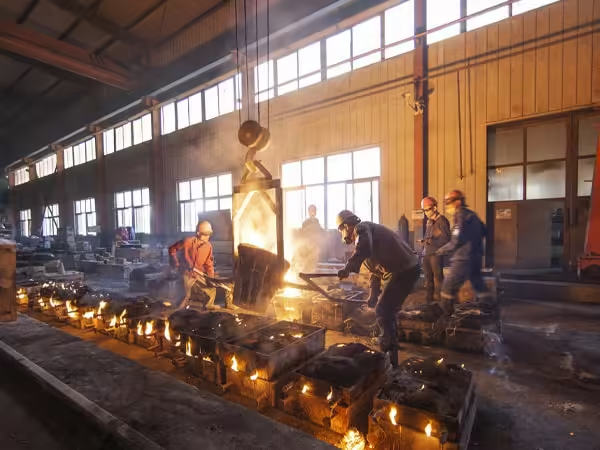
Sand casting is one of the most widely used manufacturing processes. Sand casting products are created by pouring molten metal into a sand mold, allowing complex shapes to be produced at a relatively low cost. This article covers the process, materials, advantages, limitations, comparisons, and practical applications to help readers understand and select the right method.
What Are Sand Casting Products?
Definition of Sand Casting Products
Sand casting products are metal parts formed by pouring molten metal into a sand mold. This method allows for intricate internal cavities and complex geometries that are difficult to achieve with other methods.
Applications of Sand Casting Products
These products are widely used in the automotive and industrial sectors. Examples include engine blocks, pump housings, valve bodies, and custom decorative parts.
Characteristics
Sand casting can create large or irregular parts, but the as-cast surface is generally rough. Dimensional tolerances are moderate, and post-processing is often required for precision components.
Sand Casting Products Process Overview
Pattern Making
Patterns determine the final shape of the casting and are usually made from wood, metal, or plastic. They guide the formation of the sand mold cavity.
Mold Making
Sand combined with a binder forms the mold. Proper mold strength and permeability are critical to ensure smooth metal flow and reduce defects.
Melting and Pouring
Molten metal is poured into the sand mold at controlled temperatures to avoid defects such as cold shuts or porosity.
Cooling and Shakeout
After solidification, the sand mold is broken to retrieve the casting. The part is then cleaned and prepared for finishing processes.
Finishing
Excess material is removed, and surface treatments such as grinding or polishing improve the finish and dimensional accuracy.
Types of Sand Casting Products
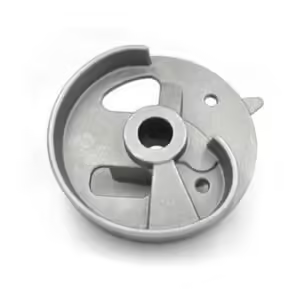
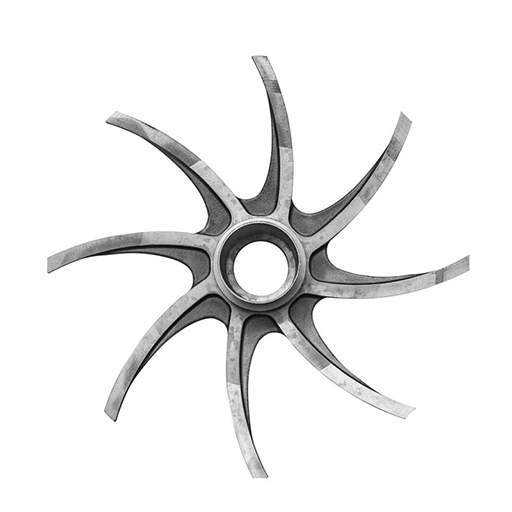
Green Sand Casting
Green sand casting uses moist sand to form the mold. It is cost-effective, flexible, and suitable for general components, but the surface finish is rough and dimensional accuracy is moderate.
Dry Sand Casting
Dry sand casting involves drying the sand mold before pouring. It allows better temperature resistance and slightly higher precision, making it suitable for steel castings.
Shell Mold Casting
Shell mold casting uses a thin resin-coated sand shell. It produces high precision and smooth surfaces, ideal for small and complex parts, though setup is more time-consuming and costly.
Comparison Table of Sand Casting Types
| Sand Casting Type | Advantages | Limitations | Typical Use |
|---|---|---|---|
| Green Sand Casting | Low cost, flexible, easy mold making | Rough surface, moderate accuracy | General automotive and industrial parts |
| Dry Sand Casting | Higher temperature resistance, better precision | Higher cost, longer preparation | Steel castings and medium-size components |
| Shell Mold Casting | High precision, smooth surface, good detail | Expensive, small part size, complex setup | Aerospace, automotive, and precision instruments |
This table helps readers quickly compare sand casting types and choose the most suitable process for their sand casting products.
Materials Used in Sand Casting Products
Common Metals
Cast iron offers strength and wear resistance, while aluminum is lightweight and corrosion-resistant. Copper alloys provide good thermal and electrical conductivity, and steel or stainless steel suits high-strength industrial applications.
Material Selection Factors
The choice of metal depends on required mechanical properties, corrosion resistance, complexity, and whether post-processing is needed for the finished component.
Advantages of Sand Casting Products
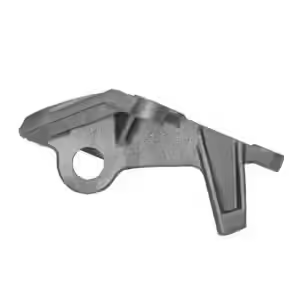
Design Flexibility
Sand casting allows production of intricate shapes and internal cavities that are difficult to achieve with other methods.
Cost Efficiency
Mold production is inexpensive, and material utilization is high, making sand casting economical for small to medium production runs.
Material Versatility
A wide range of metals can be used, adapting to different performance requirements.
Rapid Prototyping
Sand casting can quickly produce prototypes, which is useful for testing and design validation.
Limitations of Sand Casting Products
Surface Roughness
The as-cast surface is coarse and usually requires post-processing to achieve smoothness.
Dimensional Accuracy
Tolerances are wider than die casting or investment casting, requiring machining for critical dimensions.
Mechanical Properties
Porosity or sand inclusions can reduce strength, which should be considered during design.
Size Limitations
Extremely large parts require specialized molds and support structures, which may increase cost and handling complexity.
Comparison: Sand Casting Products vs Other Methods
Sand Casting vs Die Casting
Sand casting allows higher geometric complexity but results in rougher surfaces. Die casting offers smoother surfaces and high-volume efficiency but is more expensive and limited in material choice.
Sand Casting vs Forging
Sand casting enables complex shapes at lower cost, while forging produces stronger, more wear-resistant parts but is less suitable for intricate geometries.
Quality Control for Sand Casting Products
Inspection Methods
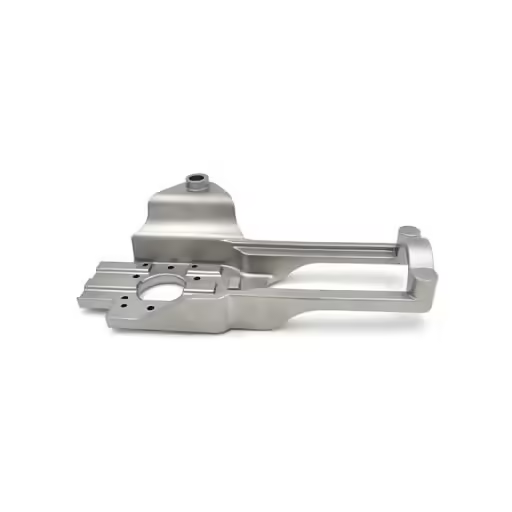
Visual inspection identifies surface defects such as cracks or sand inclusions. Dimensional measurements verify tolerances, while non-destructive testing (X-ray or ultrasonic) checks internal flaws.
Defect Prevention
Proper mold design, controlled pouring temperature, and high-quality sand reduce common defects like porosity, cold shuts, and shrinkage cavities.
Applications and Selection Guide
Sand casting products are widely used in automotive parts, industrial components, and custom or decorative items. Choose sand casting for complex shapes, medium precision, and material versatility. For smoother surfaces or high precision, consider die casting or investment casting.
Conclusion
Sand casting products combine versatility, cost-effectiveness, and adaptability. With careful material selection, mold preparation, and quality control, they can deliver functional, durable, and manufacturable parts for a wide range of industries.
Sand casting remains a cornerstone manufacturing method, ideal for parts requiring complex geometries and economical production.
FAQ
What metals are suitable for sand casting products?
Metals like cast iron, aluminum, copper alloys, and steel are commonly used depending on strength and corrosion requirements.
How strong are sand cast parts compared to forged parts?
Sand castings generally have lower strength due to porosity but are ideal for complex shapes and moderate strength requirements.
Can sand casting produce high-precision parts?
Sand casting achieves moderate tolerances, while critical dimensions often require post-machining.
Why do sand casting products sometimes have defects like porosity?
Trapped air or gas causes porosity. Correct mold venting and proper metal pouring reduce this issue.
Is sand casting cost-effective for large-scale production?
It is most economical for small to medium batches. High-volume production favors die casting for efficiency and precision.
Stay Connected with Us

Thank you for reading! We hope this blog provided you with valuable insights and inspiration on acoustic panel ceilings. If you enjoyed the content and want to stay updated with the latest trends, tips, and behind-the-scenes updates, we’d love to connect with you on social media.
📘 Follow us on Facebook: Shanghai Leierwo Industry Trade Co., Ltd.
Join our growing community where we share expert advice, product highlights, and interactive discussions with professionals and design enthusiasts from around the world.
Let’s keep the conversation going—see you there!
Product Categories
- Valve Parts
- Water Pump Parts
- Bearing Box Parts
- Die Casting Parts
- Stainless Steel Pump Products
- Cast Iron Pump Products
- Valve Parts For Automobile Use
- Auto Parts
- Valve Parts For Civil Use
- Vacuum Pump Parts KF

 English
  Spanish
  Arabic
  Malay
Malay  German