
Double Suction Impeller
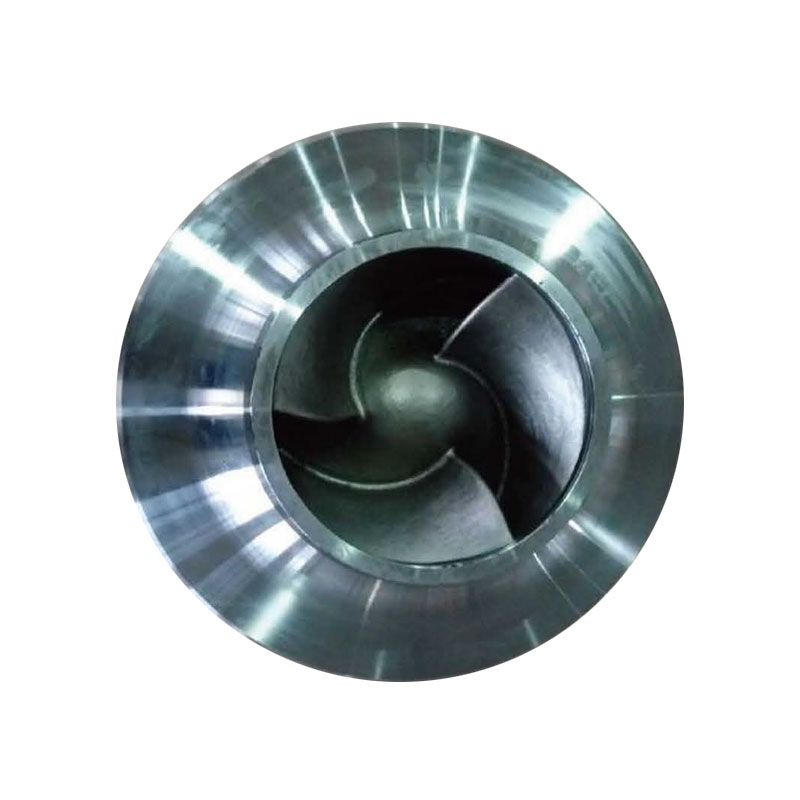
Double Suction Impeller
The Double Suction Impeller is engineered for high efficiency and balanced performance in industrial pump systems. With its unique design, the Double Suction Impeller reduces axial thrust while ensuring optimal fluid flow and durability. Ideal for demanding applications, it delivers reliability and energy savings.
The Double suction impeller is engineered to deliver superior hydraulic performance, exceptional durability, and energy efficiency across a wide range of industrial pump systems. With its symmetrical design, the Double suction impeller draws fluid into both sides of the impeller blades simultaneously, effectively reducing axial thrust and balancing hydraulic loads. This innovative configuration not only extends bearing life but also enhances pump stability during continuous operation.
Ideal for high-capacity applications such as municipal water supply, HVAC systems, power plants, and chemical processing, the Double suction impeller ensures consistent flow rates and minimizes vibration and wear. Its robust construction and precision engineering allow it to handle large volumes of liquid with reduced turbulence and noise, making it an optimal choice for long-term reliability in demanding environments.
Whether you’re upgrading existing pump systems or specifying components for new installations, the Double suction impeller offers the performance and efficiency today’s operations demand. Explore our range of impellers designed for high-performance pumping and see how a well-designed Double suction impeller can reduce energy costs and improve system longevity.
- More than 60 kinds of materials, more than a dozen alloys, and 70 kinds of numbers.
- Many products can be produced, 3500+ precision casting molds, 1000+ sand casting molds.
- The production accessories can be large or small.
- A single product of 50 kg can be customized.
- Multiple furnaces are available for selection, and single pieces of 50 kg to 850 kg can be produced.
- 20 years of master, rich experience, entered the industry in the 1980s, the industry leader.
- Products are traceable, and each furnace product has a certificate: 3.1 Material Certificate.
- Customers can ask a third-party testing agency to issue a 3.2 certificate.
- Processing fine products can be issued with a processing certificate.
Leierwo’s advantages in casting precision castings in the pump casting industry
Pump products typically require high casting precision and material properties, and Leierwo’s expertise in pump casting is particularly prominent. The company’s extensive application in pump and valve accessories demonstrates its mastery of the casting process for key components such as pump bodies, impellers, and sleeves. Precision casting technology effectively controls the uniformity of casting wall thickness and internal cavity accuracy, reducing subsequent processing and improving overall efficiency. Furthermore, the company can recommend the most appropriate casting process based on component structure to further optimize the performance of pump products and meet the corrosion resistance, heat resistance, and fluid dynamics requirements of various industries.
Main material selection
Pump castings are exposed to liquid media for extended periods and often face challenges such as corrosion, wear, and cavitation. Therefore, materials must possess high corrosion and wear resistance, as well as excellent casting properties.
Common Materials:
Stainless Steel Series:
316/316L: Preferred for pump casings, impellers, and shafts, resistant to acids, alkalis, and chloride ion corrosion. 2205 Duplex Steel: High strength and high pitting resistance, suitable for seawater pumps and chemical pumps. 304/304L: General-purpose pump components, suitable for water treatment and the food industry. Carbon Steel Series:
1045: For pump shafts and casings in non-corrosive environments. 4130: For high-temperature, high-pressure pump structural components.
Special Alloy Series:
C95400 Bronze: Suitable for seawater pump sleeves and sliding components, offering excellent wear resistance and self-lubrication.
Cobalt Alloys (such as Co6): Used for sealing surfaces or impellers in high-wear, high-temperature pumps.
Key casting service options
The fluid dynamics performance of pump components (such as impellers and pump bodies) depends on casting accuracy, and this type of service has a clear division of labor!
Investment casting: Dominates complex flow path parts. The impeller is the heart of the pump, and its blade curve (which must conform to the fluid dynamics design) has a complex shape. Dimensional deviations directly reduce pump efficiency. Investment casting can achieve blade profile accuracy of +0.1mm and a surface finish of Ra3.2um or less, reducing fluid resistance.
Sand casting: Used for fundamental components such as the pump body. The pump body, as the outer shell, has a relatively regular shape (mostly cylindrical or square). In mass production, sand casting offers low cost and short cycle times, meeting the basic requirements of “structural support + fluid flow passage.”
CNC machining: Ensures transmission and sealing accuracy. The connection between the pump shaft and impeller, as well as the sealing surface between the pump body and the end cover, require CNC machining to ensure concentricity (≤0.01mm) and flatness to prevent vibration or leakage caused by eccentricity during operation.
RELATED PRODUCTS
What We Offer
Investment Casting Service
Sand Casting Service
Our Casting Services – Fufilled Across Metal Grades
Start Your Project with Leierwo
1. Submit Your Inquiry
2. Cost Calculation
3. Start Production
4. Arrange Delivery
FAQ
We are a factory with over 20 years of experience in casting and machining. We have rich expertise in this industry. If you come across suppliers claiming to produce castings in a wide range of materials (such as steel, iron, stainless steel, copper, etc.), they are likely trading companies. If you see workshops actively producing parts, you can be assured that we are a genuine manufacturer.
Yes, as long as we receive CAD files or compatible 3D models that can be viewed with software like First Quote or Firstcut browser, we can provide a quotation. Please note that 2D drawings alone are insufficient for manufacturing precision components.
We support 3D CAD models from SolidWorks (.sldprt), ProE (.prt), and other CAD systems, commonly in IGES (.igs), STEP (.stp), ACIS (.sat), or Parasolid (.sat) formats.
We have an internal service system that responds to emails within 4 hours. If your request is urgent, please specify it in your email so we can prioritize your inquiry.
For rapid prototyping:
Silica sol casting: 20–30 days
Sand casting: 7–10 days
For mass production with machining included, the typical lead time is 45–60 days.
More complex parts may require a different delivery schedule.
Yes, we provide samples based on your drawings for you to confirm structure and quality. If the sample does not meet your requirements, we will replace it free of charge until it is qualified.
We accept T/T (bank transfer), Alipay, credit card, etc. Typically, we require a 30% down payment upon order confirmation and the remaining 70% before shipment. For custom parts with complex requirements, additional pricing terms may apply.
We have a comprehensive quality control system that covers every step, from raw material procurement to machining processes and final inspection. For critical components, we strictly follow drawing standards and customer specifications.
All customer data is kept confidential. Only trained engineers are authorized to handle production orders. Third-party inspection or factory audits are welcome, or you may use our in-house quality team for final inspection.
Yes, we guarantee that all materials used are 100% genuine and as specified.
We value long-term cooperation and support our customers’ production needs.
We believe every honest customer is a friend, and we treat our partnerships sincerely—building friendships and strong teams regardless of where our customers come from.
 English
  Spanish
  Arabic
  Malay
Malay  German