
Precision Casting Guide: Process, Materials, Tolerances and Applications
Table of Contents
Introduction
Precision casting has become one of the most important manufacturing methods for producing complex metal components with high accuracy, excellent surface quality, and reliable mechanical performance. From industrial machinery and automotive systems to pumps, valves, and precision equipment, manufacturers increasingly rely on precision casting to achieve designs that are difficult or expensive to produce through traditional machining methods.
Unlike conventional casting processes that often require extensive secondary machining, precision casting enables manufacturers to create near-net-shape metal parts with complex geometries, reduced material waste, and improved dimensional consistency.
For companies sourcing customized metal components, understanding the precision casting process, available materials, tolerance requirements, and application advantages is essential when selecting the right manufacturing partner.
As an experienced precision casting manufacturer, Leierwo provides customized solutions including investment casting, sand casting, CNC machining, and advanced manufacturing services for global industrial customers.
What Is Precision Casting?
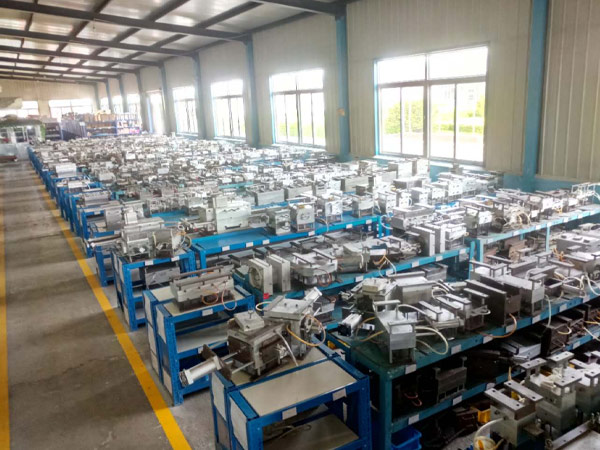
Precision casting is an advanced metal manufacturing process used to produce highly accurate cast components by forming molten metal into carefully designed molds. The process focuses on achieving tighter dimensional tolerances, smoother surface finishes, and complex geometries compared with many conventional casting methods.
Precision casting is commonly associated with investment casting, where a wax pattern is created, coated with ceramic material to form a shell, and then replaced by molten metal after the wax is removed.
This manufacturing approach allows engineers to produce:
- Complex internal structures
- Thin-wall components
- Detailed mechanical features
- Parts requiring minimal machining
- Components made from difficult-to-machine alloys
For industries requiring consistent performance and high reliability, precision casting provides an effective balance between design flexibility, production efficiency, and component quality.
How Does the Precision Casting Process Work?
The precision casting process involves several carefully controlled stages. Each step directly affects the final part accuracy, surface quality, and mechanical performance.
1. Design Analysis and Mold Development
The process begins with customer drawings, CAD models, or 3D files. Engineers analyze the component structure and evaluate:
- Wall thickness
- Draft angles
- Shrinkage allowance
- Machining allowance
- Material requirements
A well-designed casting structure helps reduce defects such as shrinkage cavities, cracks, and dimensional variation.
At Leierwo, engineering teams analyze customer designs and optimize structures according to casting characteristics before production begins.
2. Pattern Manufacturing
For investment casting, a wax pattern is produced according to the final component geometry.
The wax model represents the finished metal part and determines:
- Shape accuracy
- Surface details
- Dimensional consistency
High-quality pattern production is critical because any pattern defect may transfer to the final casting.
3. Ceramic Shell Formation
After the wax pattern is created, multiple ceramic layers are applied to form a strong mold shell.
The ceramic shell must provide:
- High-temperature resistance
- Structural strength
- Accurate reproduction of surface details
Once the shell is hardened, the wax is removed through a controlled heating process.
4. Metal Melting and Casting
The selected metal alloy is melted and poured into the ceramic mold.
Common precision casting materials include:
- Stainless steel
- Carbon steel
- Alloy steel
- Aluminum alloys
- Copper alloys
- Special engineering alloys
Material selection depends on operating conditions such as temperature, corrosion exposure, pressure, and mechanical load.
5. Finishing and Quality Inspection
After cooling, the ceramic shell is removed and the casting undergoes finishing processes.
Depending on customer requirements, additional operations may include:
- Heat treatment
- CNC machining
- Grinding
- Surface finishing
- Non-destructive testing
Quality inspection methods may include dimensional measurement, material analysis, and non-destructive testing to ensure the final components meet engineering requirements.
Precision Casting vs Traditional Casting: What Are the Differences?
Many engineers compare precision casting with traditional casting methods when selecting a manufacturing solution.
The main differences include:
| Factor | Precision Casting | Traditional Casting |
|---|---|---|
| Accuracy | Higher dimensional accuracy | Generally lower |
| Surface finish | Smoother surface | Requires more finishing |
| Complex shapes | Excellent capability | Limited by mold design |
| Material waste | Lower | Higher |
| Machining requirement | Reduced | Often increased |
| Production purpose | Precision components | Large general parts |
Precision casting is particularly suitable when a component requires complex geometry, tight tolerances, or premium surface quality.
Traditional casting may still be preferred for very large components where cost efficiency is the primary consideration.
Common Materials Used in Precision Casting
Material selection plays a major role in determining component performance.
Different industries require different combinations of strength, corrosion resistance, temperature resistance, and durability.
Stainless Steel Precision Casting
Stainless steel is one of the most widely used materials for precision casting due to its excellent corrosion resistance and mechanical properties.
Common applications include:
- Pump components
- Valve bodies
- Food processing equipment
- Chemical processing equipment
Grades such as 304 and 316 stainless steel are frequently selected for environments requiring strong corrosion resistance.
Learn more about Leierwo’s stainless steel casting capabilities for customized industrial components.
Carbon Steel Precision Casting
Carbon steel provides excellent strength and cost efficiency.
It is commonly used for:
- Structural components
- Machinery parts
- Industrial equipment
- General engineering applications
Carbon steel castings are often selected where mechanical strength is more important than corrosion resistance.
Alloy Steel Precision Casting
Alloy steel is designed for demanding working environments requiring improved:
- Wear resistance
- Fatigue strength
- High-temperature performance
Typical applications include:
- Heavy machinery
- Automotive components
- High-load industrial parts
Precision Casting Tolerances and Surface Finish
One of the biggest advantages of precision casting is improved dimensional accuracy.
The achievable tolerance depends on:
- Casting method
- Material type
- Part geometry
- Production control
- Required finishing processes
Important factors include:
Dimensional Accuracy
Precision casting helps reduce variation between production batches, making it suitable for components requiring reliable assembly.
Surface Finish
A smoother casting surface reduces the amount of machining required after production.
This provides benefits such as:
- Lower manufacturing cost
- Shorter production time
- Reduced material removal
Machining Allowance
Some components still require CNC machining for critical areas such as:
- Mounting surfaces
- Threads
- Sealing areas
- Precision holes
The combination of precision casting and CNC machining allows manufacturers to achieve both complex shapes and high functional accuracy.
Industrial Applications of Precision Casting
Precision casting is widely used across multiple industries because of its flexibility and performance advantages.
Pump Manufacturing
Pump components often require excellent dimensional accuracy and material reliability because they operate under continuous pressure and fluid exposure.
Common precision cast pump components include:
- Impellers
- Pump bodies
- Housings
- Sleeves
Investment casting is especially suitable for complex flow-path components where surface quality affects fluid efficiency.
Valve Manufacturing
Valves require strong sealing performance and resistance to pressure, temperature, and corrosion.
Precision casting is commonly used for:
- Valve bodies
- Valve seats
- Industrial flow control components
Investment casting helps produce complex valve structures with improved surface quality and reduced machining requirements.
Automotive Components
Automotive manufacturers use precision casting for components requiring strength, durability, and consistency.
Applications include:
- Transmission components
- Structural parts
- Engine-related components
- Brake system parts
Manufacturers with automotive quality systems can better support strict production requirements.
Industrial Machinery
Precision casting is widely applied in:
- Construction equipment
- Manufacturing machinery
- Automation systems
- Mechanical assemblies
Its ability to produce complex metal parts makes it valuable for customized industrial projects.
How to Choose the Right Precision Casting Manufacturer?

Selecting the correct casting supplier directly affects product quality, production efficiency, and long-term project success.
Before choosing a manufacturer, consider the following factors:
Manufacturing Capability
A reliable supplier should have experience with:
- Multiple casting processes
- Different metal materials
- Custom production requirements
- Secondary machining services
Engineering Support
A strong manufacturing partner should provide assistance with:
- Design optimization
- Material selection
- Process recommendations
- Cost improvement suggestions
Quality Control System
Important quality indicators include:
- Material inspection
- Dimensional testing
- Process monitoring
- Final inspection procedures
Global Export Experience
For international buyers, suppliers should understand:
- Export requirements
- Packaging standards
- International communication
- Delivery management
Leierwo provides customized precision casting solutions with integrated services from design evaluation and casting production to machining and delivery, supporting customers across different industries worldwide.
FAQ About Precision Casting
What is precision casting used for?
Precision casting is used for manufacturing complex metal components requiring high accuracy, smooth surfaces, and reliable performance. Common industries include automotive, pumps, valves, machinery, and precision equipment.
Is precision casting better than machining?
Precision casting and machining serve different purposes. Precision casting is ideal for complex shapes and reducing material waste, while machining is better for achieving extremely precise finishing on specific surfaces.
What metals can be used for precision casting?
Common materials include stainless steel, carbon steel, alloy steel, aluminum alloys, copper alloys, and other engineering metals.
How accurate is precision casting?
Accuracy depends on the process, material, and component design. Precision casting generally provides tighter tolerances than traditional casting methods and reduces the need for extensive machining.
Can precision casting be customized?
Yes. Precision casting is widely used for customized components based on customer drawings, CAD files, materials, dimensions, and performance requirements.
Conclusion
Precision casting provides manufacturers with an efficient solution for producing complex metal components with excellent accuracy, surface quality, and mechanical reliability.
By combining advanced casting technology, suitable material selection, and professional quality control, precision casting helps industries reduce manufacturing challenges while improving product performance.
For companies looking for customized metal components, choosing an experienced precision casting partner is essential. Leierwo supports global customers with investment casting, sand casting, CNC machining, and integrated manufacturing solutions to meet diverse industrial requirements.
Need help choosing the right precision casting solution for your project? Send your CAD drawings or part requirements to Leierwo’s engineering team for professional support and customized manufacturing advice.
Product Categories
- Valve Parts
- Water Pump Parts
- Bearing Box Parts
- Die Casting Parts
- Stainless Steel Pump Products
- Cast Iron Pump Products
- Valve Parts For Automobile Use
- Auto Parts
- Valve Parts For Civil Use
- Vacuum Pump Parts KF

Let’s start your next project!
Start Your Project with Leierwo
1. Submit Your Inquiry
2. Cost Calculation
3. Start Production
4. Arrange Delivery
FAQ
Yes, we have extensive experience in international trade and can assist customers with export customs clearance and shipping arrangements. We offer various trade terms such as FOB, CIF, and DDP to accommodate different logistics needs.We accept various international payment methods, including T/T (Telegraphic Transfer), wire transfer, and Letter of Credit (L/C). Payment terms can be discussed with our sales team.
By partnering with Leierwo, you can enjoy competitive pricing and superior quality compared to other suppliers. Additionally, we offer a one-stop solution to deliver finished parts, including CNC machining and surface treatment, ensuring a seamless production process.
We have advanced casting equipment and strict quality control systems. Our monthly production capacity is substantial, and we can manufacture products based on customer-provided drawings or samples. We accept both small trial orders and large-scale production.
Our products comply with international standards such as ASTM, AISI, DIN, and JIS. We can provide material test reports and relevant certifications to ensure product quality meets customer requirements.
We strictly follow the ISO 9001 quality management system and conduct multiple inspections throughout the production process, including spectrographic analysis, X-ray testing, ultrasonic testing, and dimensional measurements. These quality control measures guarantee that our castings meet the highest standards.
Our MOQ depends on the product type and complexity, However, we are flexible and open to discussing your specific needs.
Our standard production lead time is 4-6 weeks, depending on order quantity and product complexity. We strive to shorten delivery times to meet customer demands.
Yes, we can provide samples for quality inspection. Sample costs and shipping fees can be negotiated, and sample fees may be refunded upon placing a formal order.
 English
  Spanish
  Arabic
  Malay
Malay  German