
OEM Investment Casting for High-Precision Parts
Welcome to My Blog!
I’m thrilled to have you here! Before we dive into the content, I’d love for you to join me on my social media platforms. It’s where I share extra insights, connect with our amazing community, and keep you updated on the latest news. Here’s how you can stay connected:
📘 Facebook: Shanghai Leierwo Industry Trade Co., Ltd.
Now, let’s embark on this journey together! I hope you find the content here not only insightful but also inspiring and valuable. Let’s get started!
Table of Contents
Blog Key Points
- Introduction to OEM Investment Casting and its critical role in modern manufacturing
- Advantages for high-precision parts across industries
- Material selection, mechanical properties, and performance metrics
- Advanced design considerations and CAD/CAM integration
- Quality control, inspection, and non-destructive testing
- Common defects, troubleshooting, and prevention strategies
- Post-processing techniques and finishing standards
- Comparison with sand casting, die casting, and additive manufacturing
- Real-world case studies in aerospace, automotive, medical, and energy sectors
- Cost, production efficiency, and scalability
- Regulatory compliance, certifications, and industry standards
- Choosing the right OEM Investment Casting partner
- Frequently Asked Questions (FAQ)
Introduction
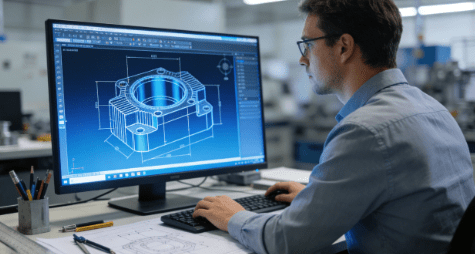
In industries like aerospace, automotive, medical devices, and energy, precision and reliability are non-negotiable. Even a tiny dimensional error or material defect can lead to component failure, production delays, or safety hazards.
OEM Investment Casting provides a solution that balances precision, material performance, and scalability. By working with an OEM supplier, manufacturers gain access to expertise in wax pattern design, ceramic shell creation, and molten metal handling, producing parts that meet extremely tight tolerances while remaining cost-effective.
Key benefits include:
- Producing parts with complex geometries impossible with traditional methods
- Reducing post-machining requirements by capturing near-net-shape features
- Supporting a wide range of materials, including stainless steel, cobalt-chromium alloys, titanium, aluminum, and specialty metals
- Delivering consistent quality for both prototype and mass production
Industry statistics show that OEM Investment Casting accounts for over 50% of high-precision component production in aerospace and medical fields, with defect rates as low as 0.2% when proper inspection protocols are followed.
What is OEM Investment Casting?
Definition and Process
OEM Investment Casting is a process where a supplier manufactures metal components directly from client specifications. The process involves:
- Creating a wax pattern of the part
- Coating it with ceramic material to form a mold
- Removing the wax via melting
- Pouring molten metal into the ceramic shell
- Breaking the mold and finishing the part
This method allows exact replication of detailed designs and ensures high precision.
Applications of High-Precision OEM Investment Casting
- Aerospace: turbine blades, engine brackets, landing gear components
- Automotive: engine valves, gears, transmission components
- Medical: implants, surgical instruments, prosthetics
- Energy & Petrochemical: pumps, valves, turbine housings
Advantages Over Other Methods
- Dimensional tolerance: ±0.1–0.2 mm for small parts
- Surface finish: Ra 0.8–1.6 µm
- Supports small-batch prototyping and large-scale production
- Wide material compatibility
Materials for High-Precision OEM Investment Casting
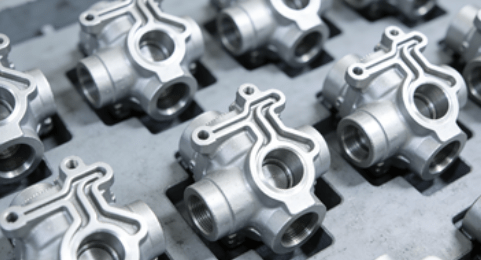
Stainless Steel 316L
- Excellent corrosion resistance and biocompatibility
- Tensile strength: 485 MPa
- Applications: surgical instruments, medical implants, food-grade components
Cobalt-Chromium Alloys
- High wear and heat resistance
- Tensile strength: 655 MPa
- Applications: orthopedic implants, aerospace components
Titanium Alloys
- Lightweight and strong, corrosion-resistant
- Tensile strength: 550 MPa
- Applications: implants, aerospace, electronics
Specialty Alloys (Hastelloy, Monel, Inconel)
- Resistant to extreme temperatures and chemical corrosion
- Tensile strength: 690–780 MPa
- Applications: high-temperature valves, energy equipment
Material Properties Table
| Material | Tensile Strength (MPa) | Corrosion Resistance | Common Applications |
|---|---|---|---|
| Stainless Steel 316L | 485 | Excellent | Surgical instruments, food, machinery |
| Cobalt-Chromium Alloy | 655 | Excellent | Implants, aerospace |
| Titanium Alloy | 550 | Superior | Aerospace, implants |
| Hastelloy/Monel/Inconel | 690–780 | Superior | High-temp, chemical parts |
Advanced Design Considerations for High-Precision Parts
CAD/CAM Integration
Modern OEM Investment Casting heavily relies on computer-aided design (CAD) and computer-aided manufacturing (CAM). This allows:
- Accurate reproduction of client specifications
- Simulation of casting flow to avoid defects
- Optimization of gating and riser design for uniform metal fill
Tolerance and Fit Analysis
- Critical for aerospace and medical devices
- Ensures parts assemble perfectly without additional machining
- Supports tolerances as tight as ±0.05 mm in some high-end applications
Topology Optimization
- Reduces material usage while maintaining strength
- Especially valuable in aerospace for weight-sensitive components
Quality Control and Inspection for OEM Investment Casting
Dimensional Accuracy
- Verified with calipers, CMM, and laser scanners
- Ensures tight tolerances for critical parts
Surface Finish
- Smooth surfaces reduce contamination, improve assembly, and lower friction
- Standard Ra: 0.8–1.6 µm; electropolishing can improve it further
Mechanical Property Testing
- Tensile strength, hardness, fatigue tests
- Confirms durability and long-term performance
Non-Destructive Testing (NDT)
- X-ray/CT scanning for internal defects
- Ultrasonic testing for micro-cracks
- Dye penetrant testing for surface flaws
Defect Prevention Table
| Defect | Cause | Prevention |
|---|---|---|
| Porosity | Trapped gas | Vacuum casting, degassing |
| Misrun | Premature solidification | Optimized gating, correct pouring |
| Oxidation | Exposure to air | Inert gas or vacuum casting |
| Surface cracks | Thermal stress | Controlled cooling, uniform mold temp |
Post-Processing Techniques
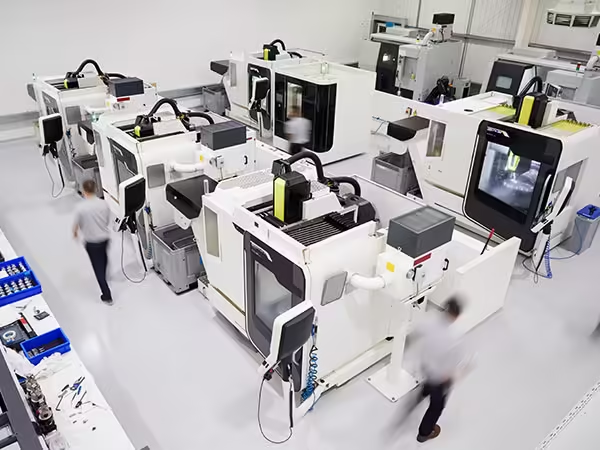
Heat Treatment
- Enhances mechanical properties
- Stress-relief and hardening for critical components
Surface Finishing
- Polishing and deburring remove burrs and improve aesthetics
- Passivation or electropolishing enhances corrosion resistance
Assembly Verification
- Ensures the cast parts fit perfectly in final assemblies
- Especially critical for surgical instruments and aerospace components
Comparison with Other Casting Methods
| Feature | OEM Investment Casting | Sand Casting | Die Casting | Additive Manufacturing |
|---|---|---|---|---|
| Tolerance | ±0.1–0.2 mm | ±0.5–1 mm | ±0.2–0.5 mm | ±0.1 mm |
| Surface Finish | Ra 0.8–1.6 µm | Ra 3–6 µm | Ra 1–3 µm | Ra 1–2 µm |
| Complex Geometry Capability | High | Limited | Medium | Very High |
| Material Options | Wide | Limited | Limited | Medium |
| Post-Processing Required | Minimal | Extensive | Moderate | Moderate |
Insight: OEM Investment Casting is superior for high-precision, complex parts where material choice and tolerance matter. Additive manufacturing can compete in prototyping but may not match material performance for production-grade components.
Real-World Case Studies
Aerospace Turbine Brackets
- ±0.1 mm tolerance achieved
- Reduced machining time by 25%
- Survived high-stress testing up to 5,500 N cyclic load
Automotive Engine Valves
- Cobalt alloy castings
- Passed thermal cycling and wear tests
- Production scalability: 1,000–10,000 units/month
Medical Surgical Instruments
- Stainless steel 316L
- Surface finish Ra 0.8 µm, reducing post-polishing by 30%
- Regulatory compliance with ISO 13485
Energy Sector Valve Housings
- Hastelloy castings
- High-temperature and chemical-resistant components
- 15-year projected lifecycle in petrochemical environments
Cost Efficiency and Production Scalability
- High-precision OEM Investment Casting may have higher unit cost than sand casting ($150–$500 for small parts), but reduces post-processing costs by 20–40%
- Supports low-volume prototypes and high-volume production
- Efficient tooling and wax pattern reuse reduce time-to-market
Regulatory Compliance and Certifications
- ISO 9001 for quality management
- ISO 13485 for medical device production
- ASTM and AMS standards for aerospace components
- RoHS and REACH compliance for environmental safety
Benefits of Compliance:
- Reduced risk of recalls and failures
- Easier acceptance by global OEMs
- Ensures traceability and audit readiness
Choosing the Right OEM Investment Casting Partner

When selecting a partner:
- Evaluate experience with high-precision components
- Check material capabilities and certifications
- Review inspection and NDT processes
- Consider production capacity and flexibility
- Examine past case studies and client references
Partnering with a reliable OEM supplier ensures consistent quality, precision, and timely delivery, critical for industries with zero tolerance for errors.
FAQ
What makes OEM Investment Casting ideal for high-precision parts?
It provides tight tolerances, excellent surface finish, and supports complex geometries not achievable with other methods.
Which industries rely most on OEM Investment Casting?
Aerospace, automotive, medical devices, energy, and electronics.
How is quality ensured?
Through dimensional checks, mechanical testing, and non-destructive testing (X-ray, CT scan, ultrasonic).
Can small-batch production maintain precision?
Yes, the process supports both prototypes and large-scale production with consistent quality.
What materials are most suitable for OEM Investment Casting?
Stainless steel 316L, cobalt-chromium alloys, titanium alloys, and specialty high-performance alloys.
Product Categories
- Valve Parts
- Water Pump Parts
- Bearing Box Parts
- Die Casting Parts
- Stainless Steel Pump Products
- Cast Iron Pump Products
- Valve Parts For Automobile Use
- Auto Parts
- Valve Parts For Civil Use
- Vacuum Pump Parts KF

 English
  Spanish
  Arabic
  Malay
Malay  German