
Investment Casting Suppliers: How to Evaluate Quality, Tolerance and Lead Time
I’m thrilled to have you here! Before we dive into the content, I’d love for you to join me on my social media platforms. It’s where I share extra insights, connect with our amazing community, and keep you updated on the latest news. Here’s how you can stay connected:
📘 Facebook: Shanghai Leierwo Industry Trade Co., Ltd.
Now, let’s embark on this journey together! I hope you find the content here not only insightful but also inspiring and valuable. Let’s get started!
Table of Contents
Key Takeaways
- Learn what distinguishes professional Investment Casting Suppliers from average manufacturers.
- Understand the relationship between casting quality, dimensional tolerance, and production consistency.
- Discover the factors that influence lead time and delivery performance.
- Compare different supplier capabilities before placing an order.
- Learn how to evaluate certifications, inspection methods, and engineering support.
- Review a practical supplier evaluation checklist for global sourcing.
- Find answers to the most common buyer questions in the FAQ section.
Selecting the right Investment Casting Suppliers is one of the most important decisions for manufacturers purchasing precision metal components. Whether your project involves automotive parts, industrial machinery, pumps and valves, agricultural equipment, marine hardware, or construction machinery, supplier capability directly affects product quality, production costs, and delivery schedules.
Today’s buyers are no longer looking only for competitive pricing. They expect suppliers to provide engineering expertise, stable quality control, consistent dimensional accuracy, flexible production capacity, and reliable after-sales service. This guide explains how to evaluate suppliers from multiple perspectives so you can reduce sourcing risks and build a long-term manufacturing partnership.
What Are Investment Casting Suppliers?
Investment Casting Suppliers are manufacturers specializing in producing precision metal components using the lost wax casting process. Unlike conventional sand casting, investment casting offers excellent dimensional accuracy, smoother surface finishes, and the ability to manufacture complex geometries with minimal machining.
Professional suppliers usually provide more than manufacturing services. They also support:
- Design optimization
- Material selection
- Tooling development
- Prototype production
- Heat treatment
- CNC machining
- Surface finishing
- Final inspection
- Global logistics
The best suppliers become manufacturing partners rather than simple component vendors.
Why Supplier Selection Matters
A qualified supplier directly influences every stage of your project.
Product Quality
Stable production processes reduce casting defects such as shrinkage, porosity, cracks, and dimensional variation.
Production Efficiency
Experienced suppliers optimize tooling, process planning, and inspection to reduce production delays.
Overall Cost
Lower defect rates and fewer machining requirements reduce the total manufacturing cost instead of simply lowering unit prices.
Long-Term Reliability
Reliable suppliers maintain consistent quality across thousands of production batches, which is essential for OEM manufacturers.
Key Factors When Evaluating Investment Casting Suppliers
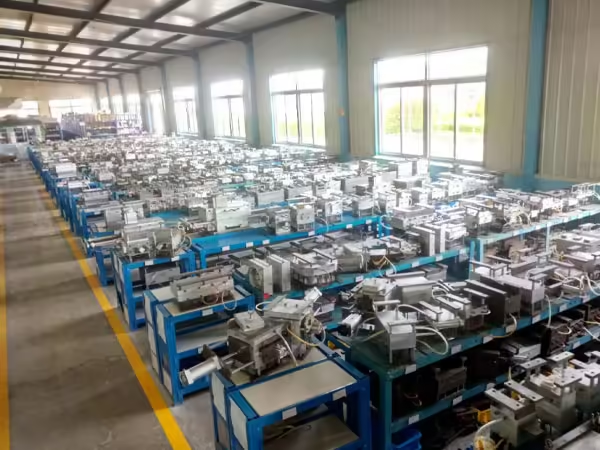
Manufacturing Experience
Experience often reflects process maturity rather than company size.
Look for suppliers that have served multiple industries over many years. Experienced manufacturers typically understand different alloy behaviors, mold design techniques, and quality standards.
Engineering Capability
Engineering support is essential during product development.
A capable engineering team can:
- Optimize casting design
- Reduce unnecessary machining
- Improve metal flow
- Increase yield rates
- Recommend alternative materials
Early engineering involvement often shortens development cycles.
Material Expertise
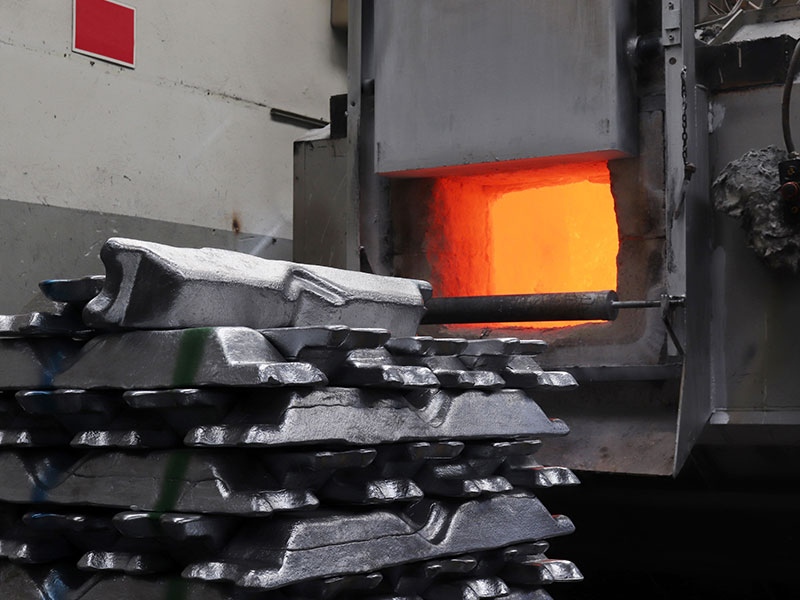
Different industries require different alloys.
Common investment casting materials include:
- Stainless Steel
- Carbon Steel
- Alloy Steel
- Duplex Stainless Steel
- Heat Resistant Steel
- Tool Steel
- Aluminum Alloys
- Bronze
- Brass
Material expertise ensures mechanical performance while balancing production costs.
How to Evaluate Casting Quality
Quality should never be judged only by appearance.
Professional Investment Casting Suppliers evaluate quality through multiple inspection stages.
Surface Finish
Good investment castings typically have:
- Smooth surfaces
- Uniform texture
- Minimal flash
- No obvious shrinkage defects
- No cold shuts
Better surface quality usually reduces secondary machining costs.
Internal Integrity
Internal quality is equally important.
Common inspection methods include:
- X-ray testing
- Ultrasonic inspection
- Dye penetrant testing
- Magnetic particle inspection
These methods detect hidden defects before shipment.
Mechanical Properties
Depending on customer requirements, suppliers may verify:
- Tensile strength
- Yield strength
- Hardness
- Elongation
- Impact resistance
Testing ensures every batch meets technical specifications.
Understanding Dimensional Tolerance
Tolerance defines the allowable dimensional variation of a casting.
Higher precision reduces machining costs but requires better process control.
Typical Investment Casting Tolerance Levels
| Feature | Typical Capability | Premium Capability |
|---|---|---|
| Linear Tolerance | CT5-CT7 | CT4-CT5 |
| Surface Roughness | Ra 3.2–6.3 μm | Ra 1.6–3.2 μm |
| Hole Accuracy | Moderate | High after machining |
| Repeatability | Good | Excellent |
| Machining Requirement | Partial | Minimal |
The required tolerance should always match the application’s functional requirements. Overly tight tolerances may unnecessarily increase production costs.
What Influences Lead Time?
Lead time depends on much more than production speed.
Tooling Development
New molds generally require additional engineering review, tooling production, and sample approval.
Material Availability
Special alloys often have longer procurement cycles than common stainless steels.
Production Capacity
Modern automated production lines usually improve scheduling flexibility and batch consistency.
Secondary Operations
Additional processes such as:
- Heat treatment
- CNC machining
- Polishing
- Electroplating
- Powder coating
- Assembly
will naturally extend delivery schedules.
Comparing Different Investment Casting Suppliers
| Evaluation Item | Basic Supplier | Professional Supplier |
|---|---|---|
| Engineering Support | Limited | Full DFM Assistance |
| Material Selection | Standard Only | Wide Alloy Options |
| Quality Inspection | Basic Visual Check | Full Inspection System |
| Prototype Service | Slow | Rapid Development |
| Production Capacity | Small Batch | Flexible Production |
| Export Experience | Limited | Global OEM Projects |
| Documentation | Basic | Complete Material & Inspection Reports |
Looking beyond unit price helps buyers identify suppliers capable of supporting long-term production programs.
Certifications That Add Confidence

Although certification alone does not guarantee product quality, it demonstrates standardized management systems.
Common certifications include:
ISO 9001
Focuses on quality management systems and continuous improvement.
IATF 16949
Widely recognized within the automotive industry.
PED
Important for pressure equipment applications.
Material Traceability
Reliable suppliers maintain complete records from raw material purchasing through finished product shipment.
Questions to Ask Before Choosing Investment Casting Suppliers
Instead of requesting only quotations, buyers should ask questions such as:
- Can you provide Design for Manufacturability (DFM) suggestions?
- What tolerance can you consistently maintain?
- Which inspection equipment do you use?
- Can you provide PPAP or FAI documentation?
- What industries do you primarily serve?
- How do you manage production consistency?
- Can you manufacture complex thin-wall castings?
- What machining capabilities are available in-house?
- What is your normal production lead time?
- Can you support low-volume prototype orders before mass production?
These questions reveal far more about supplier capability than pricing alone.
Common Mistakes Buyers Should Avoid
Choosing Based Only on Price
The lowest quotation may lead to higher overall costs due to poor quality, excessive machining, or delayed deliveries.
Ignoring Engineering Support
Suppliers with strong engineering teams often reduce production costs through design optimization.
Overlooking Inspection Capability
Quality documentation should match your industry’s requirements rather than relying solely on visual inspection.
Focusing Only on Factory Size
Large factories are not automatically better. Stable processes, experienced engineers, and responsive communication often matter more.
Supplier Evaluation Checklist
Before placing an order, consider the following checklist:
- Manufacturing experience
- Industry expertise
- Engineering capability
- Material selection
- Mold development ability
- CNC machining capacity
- Heat treatment services
- Quality inspection equipment
- International certifications
- Delivery performance
- Communication efficiency
- Technical documentation
- Export experience
- Continuous improvement process
A supplier meeting most of these criteria is more likely to deliver consistent results over long-term cooperation.
FAQ
How do I choose the best Investment Casting Suppliers?
Evaluate suppliers based on engineering capability, manufacturing experience, inspection systems, certifications, production capacity, and communication rather than price alone.
What tolerance can investment casting normally achieve?
Most precision investment castings achieve CT5–CT7 dimensional tolerance, while premium manufacturers may achieve even tighter tolerances depending on part geometry.
Does tighter tolerance always mean better quality?
No. Tolerance should match functional requirements. Excessively tight tolerances may significantly increase manufacturing costs without improving product performance.
How long does investment casting production usually take?
Prototype projects typically require several weeks including tooling, while mass production lead times depend on tooling complexity, alloy selection, machining requirements, and production scheduling.
Which industries commonly use investment casting?
Automotive, aerospace, agriculture, construction equipment, pumps and valves, mining, food processing, medical equipment, railway, marine, and energy industries all rely heavily on precision investment castings.
What documents should professional suppliers provide?
Common documentation includes material certificates, dimensional inspection reports, mechanical property reports, heat treatment records, and quality inspection reports when required.
Should I request a prototype before mass production?
Yes. Prototype validation helps verify dimensions, functionality, manufacturability, and assembly performance before investing in large-scale production.
Can one supplier provide machining and surface treatment?
Many professional Investment Casting Suppliers offer integrated manufacturing services including CNC machining, polishing, sand blasting, passivation, plating, coating, assembly, and final inspection.
Conclusion
Choosing the right Investment Casting Suppliers involves much more than comparing quotations. Manufacturers that combine advanced production technology, experienced engineering teams, rigorous quality control, and reliable delivery systems create long-term value throughout the entire product lifecycle.
For buyers seeking precision cast components, evaluating quality systems, dimensional tolerance capabilities, lead time management, material expertise, and customer support provides a far more accurate picture of supplier performance than price alone. Building a partnership with an experienced investment casting manufacturer helps reduce sourcing risks, improve production efficiency, and ensure consistent product quality for years to come.
Product Categories
- Valve Parts
- Water Pump Parts
- Bearing Box Parts
- Die Casting Parts
- Stainless Steel Pump Products
- Cast Iron Pump Products
- Valve Parts For Automobile Use
- Auto Parts
- Valve Parts For Civil Use
- Vacuum Pump Parts KF

Let’s start your next project!
Start Your Project with Leierwo
1. Submit Your Inquiry
2. Cost Calculation
3. Start Production
4. Arrange Delivery
FAQ
Yes, we have extensive experience in international trade and can assist customers with export customs clearance and shipping arrangements. We offer various trade terms such as FOB, CIF, and DDP to accommodate different logistics needs.We accept various international payment methods, including T/T (Telegraphic Transfer), wire transfer, and Letter of Credit (L/C). Payment terms can be discussed with our sales team.
By partnering with Leierwo, you can enjoy competitive pricing and superior quality compared to other suppliers. Additionally, we offer a one-stop solution to deliver finished parts, including CNC machining and surface treatment, ensuring a seamless production process.
We have advanced casting equipment and strict quality control systems. Our monthly production capacity is substantial, and we can manufacture products based on customer-provided drawings or samples. We accept both small trial orders and large-scale production.
Our products comply with international standards such as ASTM, AISI, DIN, and JIS. We can provide material test reports and relevant certifications to ensure product quality meets customer requirements.
We strictly follow the ISO 9001 quality management system and conduct multiple inspections throughout the production process, including spectrographic analysis, X-ray testing, ultrasonic testing, and dimensional measurements. These quality control measures guarantee that our castings meet the highest standards.
Our MOQ depends on the product type and complexity, However, we are flexible and open to discussing your specific needs.
Our standard production lead time is 4-6 weeks, depending on order quantity and product complexity. We strive to shorten delivery times to meet customer demands.
Yes, we can provide samples for quality inspection. Sample costs and shipping fees can be negotiated, and sample fees may be refunded upon placing a formal order.
 English
  Spanish
  Arabic
  Malay
Malay  German