
Aluminum Casting Die: Material Insights
Welcome to My Blog!
I’m thrilled to have you here! Before we dive into the content, I’d love for you to join me on my social media platforms. It’s where I share extra insights, connect with our amazing community, and keep you updated on the latest news. Here’s how you can stay connected:
📘 Facebook: Shanghai Leierwo Industry Trade Co., Ltd.
Now, let’s embark on this journey together! I hope you find the content here not only insightful but also inspiring and valuable. Let’s get started!
Table of Contents
Blog Key Points
- Why aluminum casting die material selection is critical
- Overview of common die materials and their properties
- Material performance in industrial applications
- Cost and ROI analysis for different materials
- Maintenance and lifecycle management for dies
- Advanced manufacturing techniques
- Supplier selection strategies
- Real-world case studies and examples
- Frequently Asked Questions (FAQ)
Introduction
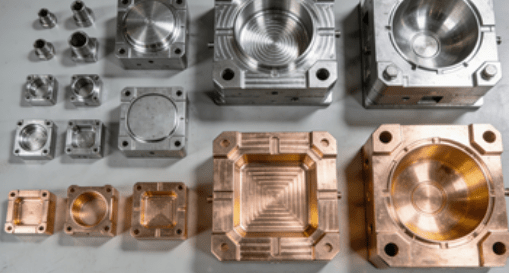
In modern manufacturing, precision and efficiency are non-negotiable. Aluminum casting dies are at the heart of high-quality casting operations, directly influencing production speed, part quality, and operational costs. Choosing the right aluminum casting die material can be the difference between smooth production runs and costly downtime.
Industry reports indicate that over 40% of die failures in automotive and aerospace casting operations are linked to inappropriate material selection, improper thermal management, or poor maintenance practices. For companies producing high-volume components, a die that wears out too quickly can cost tens of thousands of dollars annually in downtime, repair, and replacement. Understanding die material properties, thermal conductivity, wear resistance, and cost-effectiveness is critical to maximizing ROI.
This blog provides an in-depth guide to aluminum casting die materials, from traditional steel to copper alloys and aluminum prototypes, detailing how each material affects performance, maintenance, and operational cost.
Understanding Aluminum Casting Dies
What is an Aluminum Casting Die?
An aluminum casting die is a mold used to shape molten aluminum into precise components. These dies must withstand extreme temperatures, high pressures, and repeated cycles without deforming. The die’s material determines its ability to handle heat, resist wear, and maintain dimensional accuracy over long production runs.
Why Material Matters
Die material affects thermal conductivity, hardness, surface finish, and durability. Poor material choice can lead to thermal fatigue, cracking, or surface defects in the casted parts. In high-volume production environments, this can result in production delays, increased maintenance costs, and even safety hazards.
Common Materials Used in Aluminum Casting Dies
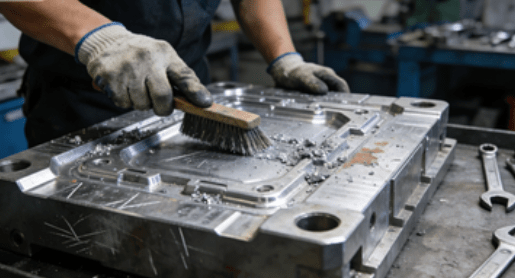
Tool Steel
Tool steel is the industry standard for high-volume, heavy-duty production. It provides excellent hardness, wear resistance, and dimensional stability. Heat-treated tool steel can withstand temperatures up to 600°C and remain precise over thousands of casting cycles.
Advantages:
- High wear resistance
- Excellent durability
- Maintains tight tolerances
Disadvantages:
- Slower thermal conductivity compared to copper
- Higher initial cost
Copper Alloys
Copper alloys are valued for their high thermal conductivity, which allows faster cooling cycles and improved surface finish. They are ideal for high-volume applications where production speed and part quality are critical.
Advantages:
- Superior heat dissipation
- Reduces cycle time
- Improves surface finish
Disadvantages:
- Softer than tool steel, higher wear over long runs
- Requires more frequent maintenance
Aluminum Dies
Aluminum dies are lightweight and primarily used for prototyping or small batch production. They offer quick heat dissipation but cannot withstand prolonged heavy-duty use.
Advantages:
- Low cost for prototypes
- Rapid heat transfer
- Easy to machine and modify
Disadvantages:
- Low durability
- Limited suitability for high-volume production
Material Properties Comparison
| Material | Hardness | Thermal Conductivity | Durability | Ideal Applications |
|---|---|---|---|---|
| Tool Steel | High | Medium | Very High | Automotive, industrial machinery |
| Copper Alloy | Medium | High | Medium | High-volume production |
| Aluminum | Low | High | Low | Prototypes, small batches |
Material Performance in Industrial Applications
Thermal Management
Proper thermal control reduces cycle times and prevents defects like warping or porosity. Copper alloys excel in thermal conductivity, reducing cooling times by 20–30% compared to tool steel, whereas aluminum dies cool even faster but lack durability.
Wear Resistance
Tool steel dies can last 5–10 years in heavy-duty production with minimal maintenance. Copper dies typically require more frequent refurbishment after 2–4 years, while aluminum dies may only last a few months in repeated high-volume operations.
Surface Finish
The hardness and thermal properties of die materials impact surface finish. High-conductivity materials like copper provide smooth surfaces by dissipating heat quickly, while tool steel maintains dimensional accuracy over thousands of cycles.
Comparing Aluminum Casting Die Materials by Industry
Automotive Industry
- Tool steel is preferred for die-cast automotive parts due to high wear resistance.
- Copper alloys are used for precision components requiring smooth surface finish.
Aerospace Industry
- Lightweight aluminum dies are suitable for low-volume prototype production.
- Tool steel is critical for high-performance components with strict tolerances.
Industrial Machinery
- Tool steel provides long-lasting durability for repeated heavy-duty casting.
- Copper alloys maintain efficiency and surface quality for medium-volume production.
Electronics and Consumer Goods
- Copper alloy dies accelerate cooling and improve surface finish, ideal for delicate or small parts.
- Aluminum dies are used for prototyping or experimental designs due to low cost and ease of machining.
Cost Considerations and Return on Investment
Initial Cost vs. Long-Term Savings
Investing in high-quality tool steel or copper dies increases upfront costs but reduces maintenance and replacement expenses over time.
Example: 5-Year Cost Analysis
| Die Material | Initial Cost | Annual Maintenance | Expected Lifespan | 5-Year Total Cost |
|---|---|---|---|---|
| Tool Steel | $7,000 | $500 | 10 years | $9,500 |
| Copper Alloy | $5,500 | $1,000 | 6 years | $10,500 |
| Aluminum | $3,500 | $1,500 | 3 years | $10,000 |
Investing in durable materials often provides the best long-term ROI despite higher initial costs.
Advanced Manufacturing Techniques
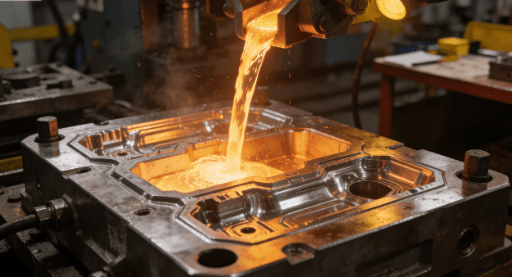
CNC Machining and Precision Finishing
High-quality aluminum casting dies are often machined using CNC equipment, which ensures tight tolerances and consistent production quality. Tolerances as tight as ±0.02 mm are achievable for complex geometries.
Surface Treatments
Techniques like nitriding, PVD coatings, or hard chrome plating improve wear resistance and extend die life. These treatments can increase die lifespan by 30–50%, depending on production volume.
Thermal Management
Incorporating cooling channels or conformal cooling systems within the die improves heat transfer and reduces cycle time by up to 25%.
Regular Inspection
Non-destructive testing (NDT), including ultrasonic and dye penetrant inspections, can detect micro-cracks before they lead to die failure. Scheduled inspections prevent unexpected downtime and maintain quality.
Selecting a Reliable Aluminum Casting Die Supplier
Supplier Expertise
Choose suppliers who understand the strengths and weaknesses of different die materials and can recommend the best solution for your application.
Manufacturing Capabilities
Ensure the supplier has modern machining, heat treatment, and quality control capabilities. Ask about their experience with CNC machining, thermal management, and surface treatment technologies.
Samples and Testing
Request sample dies or small batch production to validate die performance, surface finish, and thermal behavior before committing to large orders.
References and Case Studies
Reliable suppliers provide client references or case studies demonstrating their experience in producing high-quality aluminum casting dies for your industry.
Real-World Case Studies
Automotive Casting Success
A global automotive supplier replaced copper alloy dies with tool steel dies for high-volume engine components. Results:
- Die lifespan increased from 3 years to 8 years
- Production downtime reduced by 40%
- Surface finish consistency improved, reducing post-processing costs
Aerospace Prototype Development
An aerospace manufacturer used aluminum dies for low-volume prototypes of lightweight components. Benefits:
- Rapid turnaround for design testing
- Low upfront cost
- Flexible modifications allowed quick iterations
Industrial Machinery Production
A manufacturer producing heavy-duty pump housings switched to copper alloy dies for high-volume batches. Outcome:
- Cycle times reduced by 20%
- Surface defects decreased by 15%
- Maintenance frequency optimized
Conclusion
Understanding the material properties of aluminum casting dies is essential for selecting the right die for your production needs. Tool steel, copper alloys, and aluminum each offer unique benefits depending on volume, application, and desired surface quality. By evaluating durability, thermal behavior, wear resistance, and cost, manufacturers can optimize production efficiency, minimize downtime, and maximize ROI.
Investing in the right material and a reliable supplier ensures long die life, consistent quality, and operational success across industries ranging from automotive and aerospace to industrial machinery.
FAQ
What is the most durable aluminum casting die material?
Tool steel is the most durable, providing excellent wear resistance and long lifespan in heavy-duty production.
Can aluminum dies be used for high-volume production?
Aluminum dies are suitable for low-volume production or prototypes. For high-volume runs, tool steel or copper alloys are preferred.
How does die material affect casting surface finish?
High thermal conductivity materials like copper reduce surface imperfections, while harder materials like tool steel maintain dimensional accuracy.
How often should dies be maintained?
Tool steel dies may require minimal maintenance, while copper and aluminum dies need frequent inspections, especially in high-volume operations.
Are cost-effective alternatives available for small production runs?
Yes, aluminum dies provide low-cost solutions for prototyping and short production cycles, with rapid heat dissipation and easy machining.
How long can I expect an aluminum casting die to last?
Lifespan varies: tool steel dies last 5–10 years, copper alloys 2–4 years, aluminum dies 6–12 months for high-volume operations.
Product Categories
- Valve Parts
- Water Pump Parts
- Bearing Box Parts
- Die Casting Parts
- Stainless Steel Pump Products
- Cast Iron Pump Products
- Valve Parts For Automobile Use
- Auto Parts
- Valve Parts For Civil Use
- Vacuum Pump Parts KF

 English
  Spanish
  Arabic
  Malay
Malay  German