
China Investment Casting Lab: Advanced China Investment Casting Technology, Standards, and Industrial Applications
Welcome to My Blog!
I’m thrilled to have you here! Before we dive into the content, I’d love for you to join me on my social media platforms. It’s where I share extra insights, connect with our amazing community, and keep you updated on the latest news. Here’s how you can stay connected:
📘 Facebook: Shanghai Leierwo Industry Trade Co., Ltd.
Now, let’s embark on this journey together! I hope you find the content here not only insightful but also inspiring and valuable. Let’s get started!
Table of Contents
Introduction
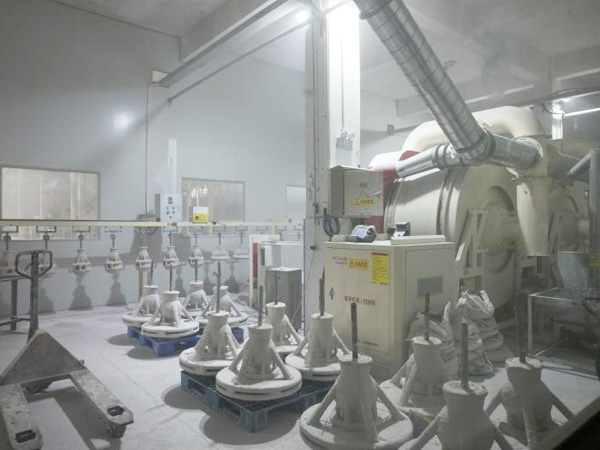
In modern precision manufacturing, the demand for high-performance metal components is increasing across aerospace, automotive, energy, and industrial machinery sectors. The China Investment Casting Lab has become a critical driver behind this transformation, serving as the innovation and validation center for advanced china investment casting processes.
Unlike traditional foundries focused only on production, a modern casting laboratory integrates simulation, material science, defect analysis, and process optimization. This ensures that every stage of china investment casting meets strict international performance expectations.
Today, global buyers rely on China not only for cost efficiency but also for engineering-grade consistency, dimensional accuracy, and scalable production capability. According to industry manufacturing reports (2024), China accounts for over 50% of global investment casting output, with precision components growing at an annual rate of 6–8%.
China Investment Casting Lab Overview and Industrial Role
The China Investment Casting Lab is not a single facility but a structured system combining R&D centers, testing laboratories, and pilot production lines.
Core Functions of China Investment Casting Lab
The lab focuses on validating every stage of china investment casting, including:
- Wax pattern accuracy testing
- Ceramic shell strength evaluation
- Alloy composition verification
- Solidification simulation analysis
- Defect detection and metallurgical inspection
These functions ensure that mass production maintains stability and repeatability.
Digital Transformation in China Investment Casting
Modern labs now rely heavily on:
- CAD/CAM modeling systems
- CAE simulation software (mold flow, thermal analysis)
- 3D wax printing technologies
- AI-based defect prediction systems
This digital shift significantly improves china investment casting efficiency while reducing prototype failure rates by up to 30% in advanced facilities.
Technical Definition of China Investment Casting
What is China Investment Casting?
China investment casting is a precision manufacturing process that uses a wax model coated in ceramic material to create complex metal parts with excellent dimensional accuracy.
Industrial Position of China Investment Casting
It is widely used in applications where machining is expensive or geometries are too complex for forging or sand casting.
Typical Precision Range
- Dimensional tolerance: ISO 8062 CT4–CT6
- Machining allowance: 0.5–2.0 mm
- Surface roughness: Ra 1.6–6.3 μm
- Weight range: 0.05 kg – 100 kg
These standards make china investment casting suitable for high-end engineering components.
China Investment Casting Process in Lab Environment
Wax Pattern Engineering in China Investment Casting
Wax pattern accuracy is the foundation of final product precision.
Key parameters controlled:
- Shrinkage rate (0.5%–1.2%)
- Wax injection pressure stability
- Mold temperature consistency
Ceramic Shell Development in China Investment Casting
Shell building involves multiple layers:
- Primary slurry coating
- Fine refractory sand stucco
- Backup layer reinforcement
- Final sealing layer
Each layer is dried under controlled humidity (typically 40–60%) to ensure shell integrity in china investment casting production.
Metal Pouring Simulation
Before actual casting, molten metal flow is simulated to predict:
- Air entrapment risk
- Solidification shrinkage
- Thermal stress distribution
This step reduces scrap rate in china investment casting by 15–25% in optimized labs.
Materials and Metallurgy in China Investment Casting
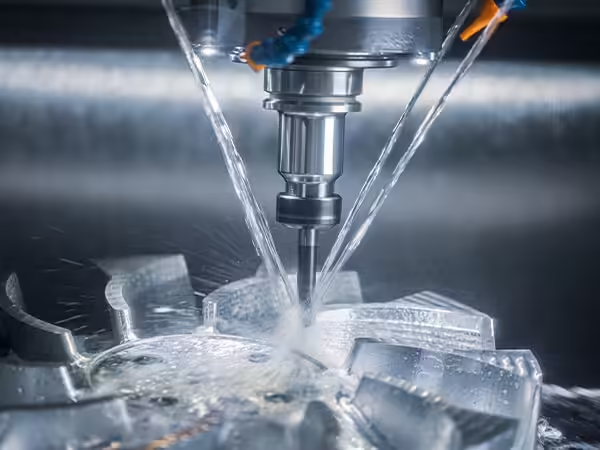
Common Materials Used in China Investment Casting
- Austenitic stainless steel (304, 316)
- Carbon steel (AISI 1045 equivalents)
- Aluminum alloys (A356, ADC12)
- Nickel-based superalloys (Inconel series)
Metallurgical Control Standards
Most china investment casting facilities follow:
- ASTM A958 (steel castings)
- ISO 4990 (steel castings inspection)
- ISO 9001 quality systems
Material Performance Comparison
| Material | Strength | Heat Resistance | Corrosion Resistance | Application |
|---|---|---|---|---|
| Stainless Steel | High | Medium | Very High | Pumps, valves |
| Carbon Steel | High | Medium | Medium | Machinery parts |
| Aluminum Alloy | Medium | Low | High | Automotive |
| Superalloy | Very High | Very High | Very High | Aerospace |
China Investment Casting vs Other Casting Methods
China Investment Casting vs Sand Casting
| Feature | China Investment Casting | Sand Casting |
|---|---|---|
| Precision | High (CT4–CT6) | Low (CT10–CT13) |
| Surface Finish | Smooth | Rough |
| Complexity | Very High | Medium |
| Cost per Unit | Higher | Lower |
| Machining Requirement | Low | High |
China Investment Casting vs Forging
Forging provides higher strength but limited geometry flexibility. In contrast, china investment casting supports complex internal structures, thin walls, and lightweight designs.
Quality Control System in China Investment Casting Lab
Dimensional Inspection
Coordinate Measuring Machines (CMM) ensure precision up to ±0.01 mm.
X-Ray and NDT Testing
Non-destructive testing methods include:
- X-ray imaging
- Ultrasonic inspection
- Magnetic particle testing
These methods detect internal porosity in china investment casting components.
Mechanical Testing Standards
- Tensile strength testing
- Hardness testing (HRC, HB)
- Impact resistance (Charpy test)
Industry Applications of China Investment Casting
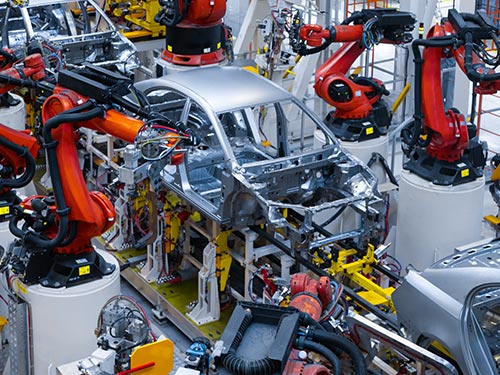
Aerospace Industry
Used in turbine blades, fuel system parts, and engine housings.
Case insight:
A leading aerospace supplier reported that switching to china investment casting reduced component weight by 18% while maintaining structural strength.
Automotive Industry
Applications include:
- Turbocharger wheels
- Transmission components
- Exhaust system parts
Industrial Machinery
Used in:
- Pump impellers
- Valve bodies
- Hydraulic components
Cost Structure of China Investment Casting
Breakdown of Production Cost
| Cost Element | Percentage |
|---|---|
| Material Cost | 35% |
| Labor Cost | 20% |
| Tooling Cost | 15% |
| Energy Consumption | 10% |
| Quality Inspection | 10% |
| Logistics | 10% |
Understanding cost structure helps buyers evaluate china investment casting suppliers more effectively.
Automation and Smart Manufacturing in China Investment Casting Lab
Robotics in Casting Production
Robotic arms are used for:
- Wax injection handling
- Shell coating processes
- Material transfer
AI-Based Quality Prediction
Machine learning models analyze:
- Defect probability
- Cooling curve anomalies
- Shell cracking risk
This improves production efficiency in china investment casting labs by up to 20%.
Case Study: Valve Body Manufacturing via China Investment Casting
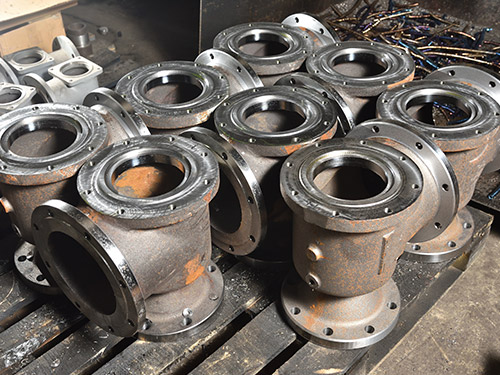
A European industrial equipment company required high-precision stainless steel valve bodies.
Challenges
- Complex internal fluid channels
- High pressure resistance requirement (PN40 standard)
- Tight sealing tolerance requirements
Solution Using China Investment Casting
The china investment casting lab implemented:
- 3D printed wax patterns
- Multi-layer ceramic shell reinforcement
- CFD simulation for flow optimization
Results
- Defect rate reduced to below 2%
- Production cycle shortened by 18%
- Machining cost reduced by 30%
Industry Standards and White Paper Insights
Recent manufacturing white papers highlight:
- Precision casting demand growing due to lightweight engineering trends
- Increased adoption of ISO 8062 tolerance standards in China
- Rising global outsourcing to china investment casting suppliers for cost optimization
According to 2025 industrial data, over 65% of mid-to-high complexity cast components in global supply chains are now sourced from China.
Environmental and Sustainability Practices
Modern china investment casting labs are adopting:
- Water-based ceramic slurries
- Wax recycling systems (up to 90% reuse rate)
- Low-emission melting furnaces
These improvements reduce carbon emissions per unit by approximately 12–18%.
FAQ
What makes China investment casting different from traditional casting?
It provides higher precision, smoother surfaces, and better capability for complex geometries.
Is China investment casting suitable for mass production?
Yes, especially for medium to high-volume precision parts.
What industries benefit most from China investment casting?
Aerospace, automotive, energy, medical devices, and industrial machinery.
What is the typical tolerance level?
Most china investment casting processes achieve ISO CT4–CT6 accuracy levels.
Why is China a global leader in investment casting?
Due to advanced manufacturing infrastructure, cost efficiency, and strong engineering expertise.
Conclusion
The China Investment Casting Lab represents the future of precision metal manufacturing. With continuous improvements in automation, digital simulation, and material engineering, china investment casting is evolving into a highly intelligent, data-driven manufacturing system.
As global demand increases for lightweight, complex, and high-performance components, China’s investment casting ecosystem will continue to play a central role in shaping industrial supply chains worldwide.
Product Categories
- Valve Parts
- Water Pump Parts
- Bearing Box Parts
- Die Casting Parts
- Stainless Steel Pump Products
- Cast Iron Pump Products
- Valve Parts For Automobile Use
- Auto Parts
- Valve Parts For Civil Use
- Vacuum Pump Parts KF

Let’s start your next project!
Start Your Project with Leierwo
1. Submit Your Inquiry
2. Cost Calculation
3. Start Production
4. Arrange Delivery
FAQ
Yes, we have extensive experience in international trade and can assist customers with export customs clearance and shipping arrangements. We offer various trade terms such as FOB, CIF, and DDP to accommodate different logistics needs.We accept various international payment methods, including T/T (Telegraphic Transfer), wire transfer, and Letter of Credit (L/C). Payment terms can be discussed with our sales team.
By partnering with Leierwo, you can enjoy competitive pricing and superior quality compared to other suppliers. Additionally, we offer a one-stop solution to deliver finished parts, including CNC machining and surface treatment, ensuring a seamless production process.
We have advanced casting equipment and strict quality control systems. Our monthly production capacity is substantial, and we can manufacture products based on customer-provided drawings or samples. We accept both small trial orders and large-scale production.
Our products comply with international standards such as ASTM, AISI, DIN, and JIS. We can provide material test reports and relevant certifications to ensure product quality meets customer requirements.
We strictly follow the ISO 9001 quality management system and conduct multiple inspections throughout the production process, including spectrographic analysis, X-ray testing, ultrasonic testing, and dimensional measurements. These quality control measures guarantee that our castings meet the highest standards.
Our MOQ depends on the product type and complexity, However, we are flexible and open to discussing your specific needs.
Our standard production lead time is 4-6 weeks, depending on order quantity and product complexity. We strive to shorten delivery times to meet customer demands.
Yes, we can provide samples for quality inspection. Sample costs and shipping fees can be negotiated, and sample fees may be refunded upon placing a formal order.
 English
  Spanish
  Arabic
  Malay
Malay  German