
303 Stainless Steel vs 304: Key Differences – Complete Professional Guide for Engineers and Buyers
Welcome to My Blog!
I’m thrilled to have you here! Before we dive into the content, I’d love for you to join me on my social media platforms. It’s where I share extra insights, connect with our amazing community, and keep you updated on the latest news. Here’s how you can stay connected:
📘 Facebook: Shanghai Leierwo Industry Trade Co., Ltd.
Now, let’s embark on this journey together! I hope you find the content here not only insightful but also inspiring and valuable. Let’s get started!
Table of Contents
Blog Overview: What You Will Learn
- Key composition differences between 303 stainless steel and 304 stainless steel
- Mechanical properties and corrosion resistance comparison
- Machinability, welding, and fabrication considerations
- Surface treatment, maintenance, and lifespan
- International standards and compliance (ASTM, ISO, EN)
- Real-world applications, case studies, and industrial examples
- Tips for selecting the right material for your project
- Sustainability and recycling aspects of stainless steel
- Frequently asked questions (FAQ) about 303 stainless steel
- Comparison tables, charts, and actionable insights
Introduction
Stainless steel is a backbone material in modern industry, from automotive to medical, aerospace to food processing. Among the hundreds of grades, 303 stainless steel and 304 stainless steel are two of the most widely used austenitic types.
- 303 stainless steel is engineered for improved machinability, making it ideal for fasteners, screws, shafts, and precision components.
- 304 stainless steel offers superior corrosion resistance and versatility, making it a go-to choice for food equipment, chemical storage, and architectural applications.
Choosing the wrong grade can lead to premature corrosion, machining difficulties, or increased production costs. This guide provides engineers, buyers, and fabricators with a comprehensive resource to understand and compare these two critical stainless steel grades.
Understanding 303 Stainless Steel

Definition and Composition
303 stainless steel is a modification of 304, enriched with sulfur or selenium to enhance machinability.
- Chromium: 17–19%
- Nickel: 8–10%
- Sulfur/Selenium: ~0.15–0.35%
- Carbon: ≤0.15%
The addition of sulfur improves chip breaking during machining, which reduces tool wear and improves production efficiency.
Mechanical Properties
| Property | Value |
|---|---|
| Tensile Strength | 515 MPa |
| Yield Strength | 205 MPa |
| Hardness | 170 HB |
| Elongation | 40% |
These properties make 303 stainless steel suitable for medium-strength components requiring precision machining.
Advantages of 303 Stainless Steel
- Superior machinability, especially in automatic lathes or CNC equipment
- Consistent dimensional accuracy due to controlled chip formation
- Retains corrosion resistance in mildly corrosive environments
- Reduces production downtime from tool wear
Understanding 304 Stainless Steel
Definition and Composition
304 stainless steel is the most widely used austenitic stainless steel, valued for its corrosion resistance, toughness, and versatility.
- Chromium: 18%
- Nickel: 8%
- Carbon: ≤0.08%
Mechanical Properties
| Property | Value |
|---|---|
| Tensile Strength | 505 MPa |
| Yield Strength | 215 MPa |
| Hardness | 150–200 HB |
| Elongation | 40–50% |
304 stainless steel provides excellent resistance to oxidation, acids, and alkaline solutions, making it suitable for harsh industrial environments.
Advantages of 304 Stainless Steel
- Exceptional corrosion resistance for food, chemical, and marine applications
- Excellent formability, bending, and welding properties
- Long service life and minimal maintenance requirements
303 vs 304 Stainless Steel: Direct Comparison
Machinability and Production Efficiency
- 303 stainless steel: Ideal for high-speed machining, reduced tool wear, and short production cycles.
- 304 stainless steel: More challenging to machine due to ductility and toughness; requires optimized cutting parameters.
Corrosion Resistance
- 303 stainless steel: Adequate for indoor or mildly corrosive environments, but prone to stress corrosion cracking under high chloride exposure.
- 304 stainless steel: Excellent resistance across diverse environments, including mild acids, seawater, and atmospheric exposure.
Welding and Fabrication
- 303 stainless steel: Welding can be difficult; preheating and post-weld treatments often required to avoid cracking.
- 304 stainless steel: Excellent weldability; widely used in welded structures, tanks, and piping systems.
Key Comparison Table
| Feature | 303 Stainless Steel | 304 Stainless Steel |
|---|---|---|
| Machinability | Excellent | Moderate |
| Corrosion Resistance | Good | Excellent |
| Weldability | Limited | Excellent |
| Hardness | 170 HB | 150–200 HB |
| Typical Applications | Screws, bolts, shafts | Food equipment, tanks, architectural panels |
| Sulfur/Selenium | Added for machinability | None |
Applications and Industrial Use
303 Stainless Steel Applications
- Screws, nuts, bolts, and fasteners for machinery
- Shafts, fittings, and precision components
- Aerospace and automotive parts requiring high production efficiency
304 Stainless Steel Applications
- Food processing machinery (mixers, tanks, piping)
- Chemical storage and transport
- Architectural facades and decorative panels
- Medical and laboratory equipment
Case Study: Automotive Fasteners
A European automotive supplier switched from 304 to 303 stainless steel for engine fasteners:
- Machining time reduced by 35%
- Tool life increased by 50%
- Overall production cost decreased by 12%
Surface Treatments and Corrosion Prevention
Common Treatments for 303 Stainless Steel
- Passivation: Removes free iron and improves corrosion resistance
- Electroplating: Provides additional protection for high-wear components
- Polishing: Improves aesthetics and reduces friction
Common Treatments for 304 Stainless Steel
- Electropolishing: Enhances corrosion resistance for chemical and food applications
- Pickling: Removes oxide layers after welding
- Coatings: Optional for marine or highly acidic environments
Environmental Considerations
- 303 stainless steel may need coatings in chloride-rich environments
- 304 stainless steel withstands most indoor and outdoor exposure without additional protection
International Standards and Compliance
| Standard | Description |
|---|---|
| ASTM A582 | Specification for free-machining stainless steel bars |
| ASTM A240 | Stainless steel plate, sheet, and strip |
| ISO 3506 | Mechanical properties of corrosion-resistant stainless steel fasteners |
| EN 10088 | Stainless steels – Technical delivery conditions |
These standards provide reliable benchmarks for material quality, mechanical properties, and corrosion resistance, critical for procurement and engineering decisions.
Maintenance and Lifespan
- 303 stainless steel: 5–10 years in industrial conditions; requires periodic cleaning and lubrication in exposed environments
- 304 stainless steel: 10–20 years, minimal maintenance in most industrial, food, and architectural applications
Best Practices
- Regular inspection for signs of wear or corrosion
- Clean with neutral detergents; avoid chloride-rich cleaners for 303
- Store components in dry, temperature-controlled environments
Sustainability and Recycling
- Stainless steel is 100% recyclable without loss of quality
- Recycling 1 ton of stainless steel saves ~6,000 kWh of energy compared to primary production
- Using 303 or 304 stainless steel in sustainable designs contributes to circular economy goals
Choosing Between 303 and 304 Stainless Steel
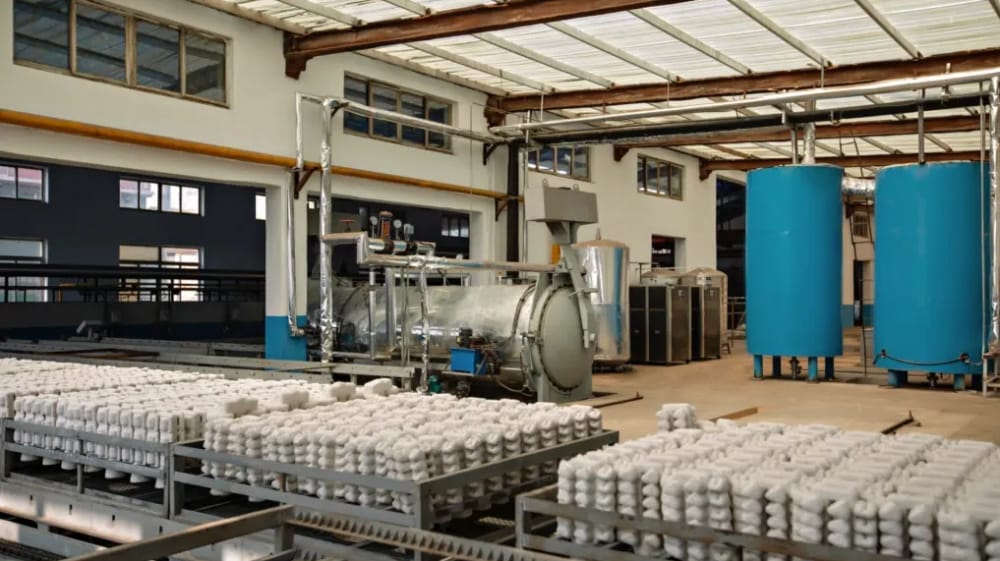
Selecting the right stainless steel grade is critical for ensuring product performance, manufacturing efficiency, and long-term durability. Engineers, buyers, and procurement specialists often face the challenge of balancing machinability, corrosion resistance, cost, and operational requirements. Below is a comprehensive guide to choosing between 303 stainless steel and 304 stainless steel for various applications.
Key Selection Factors
1. Machinability and Production Efficiency
- 303 stainless steel is specifically formulated for high-speed machining. Its sulfur or selenium content allows for easier chip breaking and reduces tool wear, which is particularly valuable in automated CNC production or mass manufacturing of small precision components like screws, bolts, and shafts.
- 304 stainless steel, while versatile, is tougher and more ductile. Machining 304 often requires slower feed rates, specialized tooling, and cooling lubricants to prevent work hardening and maintain surface finish quality.
Practical Recommendation:
If your project involves high-volume production of small, precise fasteners, 303 stainless steel will often save labor, tooling, and machine time, reducing overall manufacturing costs.
2. Corrosion Resistance and Environmental Exposure
- 304 stainless steel offers superior corrosion resistance compared to 303, making it suitable for harsh environments, food processing equipment, marine applications, and chemical storage.
- 303 stainless steel performs well in indoor, mild, or moderately corrosive environments but may develop pitting or stress corrosion cracking under high chloride exposure or constant wet conditions.
Practical Recommendation:
For outdoor, marine, or chemical-exposed applications, 304 stainless steel is often the safer and more durable choice.
3. Welding and Fabrication Considerations
- 303 stainless steel can be challenging to weld, and special precautions, including preheating or post-weld stress relief, are often required to avoid cracking due to its higher sulfur/selenium content.
- 304 stainless steel is highly weldable and maintains structural integrity without special post-processing, making it ideal for tanks, piping systems, architectural frameworks, and welded assemblies.
Tip: When your project requires extensive welding or fabrication, 304 stainless steel usually reduces rework and labor costs.
4. Surface Finish and Aesthetic Considerations
- 304 stainless steel generally achieves a more polished, uniform surface after finishing, which is important for visible architectural elements or food-grade equipment.
- 303 stainless steel may show slight variations in finish after machining but can still meet functional and industrial standards for mechanical components.
5. Cost vs. Long-Term Performance
- 303 stainless steel: Slightly lower upfront material cost and significantly lower machining cost for complex components.
- 304 stainless steel: Higher initial cost, but lower long-term maintenance and replacement costs due to its superior corrosion resistance and durability.
Decision Logic:
- Short-term or budget-sensitive projects with light corrosion exposure → 303 stainless steel
- Long-term projects with high environmental stress, hygienic requirements, or visible components → 304 stainless steel
6. Mixed or Specialized Environments
In some cases, the operating environment may be mixed, such as semi-outdoor machinery with occasional moisture exposure. In these scenarios:
- Evaluate surface treatments, coatings, and maintenance schedules. For example, a coated 303 stainless steel fastener may perform adequately in mildly corrosive conditions while offering machining efficiency benefits.
- Consider a hybrid design approach, using 303 stainless steel for mechanical components and 304 stainless steel for exposed surfaces.
7. Industry Examples
- Automotive Industry: High-speed engine fasteners and precision shafts often use 303 stainless steel for reduced machining time, while exhaust systems and brackets exposed to moisture use 304 stainless steel.
- Food and Beverage Equipment: Valves, tanks, and piping are predominantly 304 stainless steel, while internal fasteners can utilize 303 for efficiency.
- Medical Devices: Surgical tools or fasteners needing precision machining may favor 303 stainless steel, but devices in contact with bodily fluids usually require 304 for corrosion resistance.
8. Summary Table: Selection Guidance
| Factor | 303 Stainless Steel | 304 Stainless Steel |
|---|---|---|
| Machinability | Excellent | Moderate |
| Corrosion Resistance | Good | Excellent |
| Weldability | Limited, requires care | Excellent, versatile |
| Surface Finish | Functional, less polished | Smooth, aesthetic |
| Cost | Lower machining cost | Higher upfront, lower long-term cost |
| Environmental Suitability | Mild to moderate | Harsh, wet, marine, chemical |
| Typical Uses | Fasteners, shafts, precision components | Tanks, piping, architectural, food equipment |
Expert Tips for Decision-Making
- Define priorities: Determine whether machinability, corrosion resistance, cost, or longevity is your top concern.
- Analyze operational environment: Assess moisture, chemicals, and temperature exposure.
- Consider maintenance schedules: If maintenance is infrequent, 304 stainless steel may reduce lifecycle costs.
- Consult international standards: ASTM A582 for 303 and ASTM A240 for 304 provide material specifications to ensure compliance.
- Perform pilot testing: Machining or field tests with small batches help verify material behavior before mass production.
FAQ
Q1: Is 303 stainless steel magnetic?
A1: Typically non-magnetic in the annealed state, like other austenitic steels.
Q2: Can 303 stainless steel be welded?
A2: Yes, but specialized welding techniques are recommended to avoid cracking.
Q3: Which is better for high-speed screws, 303 or 304?
A3: 303 stainless steel, due to improved machinability and chip breaking properties.
Q4: How long does 303 stainless steel last in industrial applications?
A4: Generally 5–10 years, depending on environmental exposure and maintenance.
Q5: Is 303 stainless steel resistant to rust?
A5: Yes, but 304 offers superior corrosion resistance in harsh or marine conditions.
Conclusion
Both 303 stainless steel and 304 stainless steel are essential materials in modern industry. Understanding their composition, machinability, corrosion resistance, welding behavior, and real-world applications allows engineers and buyers to make informed decisions.
- 303 stainless steel: Optimized for machining, fasteners, and precision components.
- 304 stainless steel: Superior corrosion resistance, versatile in structural and hygienic applications.
By selecting the right grade, applying proper treatments, and adhering to international standards, manufacturers can optimize efficiency, cost, and durability across diverse industries from automotive to medical and food processing.
Product Categories
- Valve Parts
- Water Pump Parts
- Bearing Box Parts
- Die Casting Parts
- Stainless Steel Pump Products
- Cast Iron Pump Products
- Valve Parts For Automobile Use
- Auto Parts
- Valve Parts For Civil Use
- Vacuum Pump Parts KF

Let’s start your next project!
Start Your Project with Leierwo
1. Submit Your Inquiry
2. Cost Calculation
3. Start Production
4. Arrange Delivery
FAQ
Yes, we have extensive experience in international trade and can assist customers with export customs clearance and shipping arrangements. We offer various trade terms such as FOB, CIF, and DDP to accommodate different logistics needs.We accept various international payment methods, including T/T (Telegraphic Transfer), wire transfer, and Letter of Credit (L/C). Payment terms can be discussed with our sales team.
By partnering with Leierwo, you can enjoy competitive pricing and superior quality compared to other suppliers. Additionally, we offer a one-stop solution to deliver finished parts, including CNC machining and surface treatment, ensuring a seamless production process.
We have advanced casting equipment and strict quality control systems. Our monthly production capacity is substantial, and we can manufacture products based on customer-provided drawings or samples. We accept both small trial orders and large-scale production.
Our products comply with international standards such as ASTM, AISI, DIN, and JIS. We can provide material test reports and relevant certifications to ensure product quality meets customer requirements.
We strictly follow the ISO 9001 quality management system and conduct multiple inspections throughout the production process, including spectrographic analysis, X-ray testing, ultrasonic testing, and dimensional measurements. These quality control measures guarantee that our castings meet the highest standards.
Our MOQ depends on the product type and complexity, However, we are flexible and open to discussing your specific needs.
Our standard production lead time is 4-6 weeks, depending on order quantity and product complexity. We strive to shorten delivery times to meet customer demands.
Yes, we can provide samples for quality inspection. Sample costs and shipping fees can be negotiated, and sample fees may be refunded upon placing a formal order.
 English
  Spanish
  Arabic
  Malay
Malay  German