
What Is Investment Casting Process? A Complete and Professional Guide
Welcome to My Blog!
I’m thrilled to have you here! Before we dive into the content, I’d love for you to join me on my social media platforms. It’s where I share extra insights, connect with our amazing community, and keep you updated on the latest news. Here’s how you can stay connected:
📘 Facebook: Shanghai Leierwo Industry Trade Co., Ltd.
Now, let’s embark on this journey together! I hope you find the content here not only insightful but also inspiring and valuable. Let’s get started!
Table of Contents
In today’s rapidly evolving manufacturing industry, precision and reliability are no longer optional—they are essential. Components used in aerospace, automotive, medical devices, and energy systems must meet extremely tight tolerances while maintaining material integrity. This is where investment casting, also known as lost-wax casting, has become a cornerstone technology. Understanding what is investment casting and its process can help engineers, manufacturers, and buyers make informed decisions for complex metal parts.
This guide will explore:
- A detailed explanation of what is investment casting
- Step-by-step process, from wax pattern to finished part
- Material selection, mold types, and surface finishes
- Advantages over sand casting, die casting, and machining
- Cost, scalability, and sustainability considerations
- Common applications and case studies
- Industry trends, automation, and future innovations
- FAQs based on real-world queries from engineers and buyers
Step 1: Introduction to Investment Casting
Concept and Definition
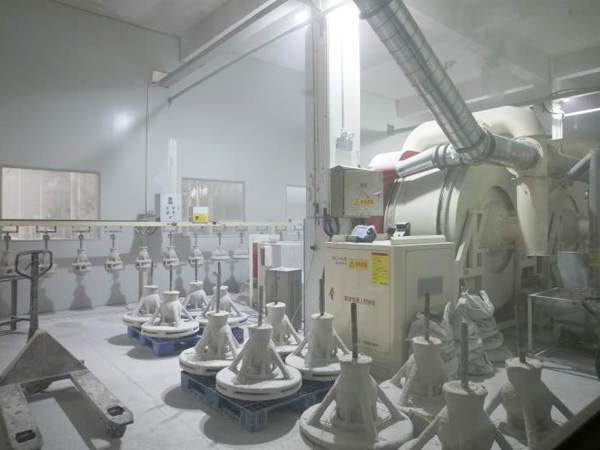
Investment casting is a metal casting process that allows for highly precise, complex, and near-net-shape components. Unlike sand casting, investment casting produces parts with tight dimensional tolerances, smooth surface finishes, and minimal post-processing.
The process involves creating a wax pattern, coating it with a ceramic shell, melting out the wax, and then pouring molten metal into the cavity. Once cooled, the ceramic shell is broken away, leaving a finished metal part.
Historical Background
Investment casting dates back to 2000 BC, with evidence of lost-wax casting in Mesopotamia and ancient Egypt. Modern industrial investment casting emerged in the 20th century, evolving into high-precision processes suitable for aerospace, medical implants, and automotive components.
Data Insight: According to a 2024 report by the Investment Casting Institute, investment casting accounts for over 15% of all precision metal components in aerospace and defense applications worldwide.
Step 2: Key Materials Used in Investment Casting
Metals for Casting
Investment casting can accommodate a wide range of metals:
- Stainless steel: corrosion-resistant, widely used in valves, pumps, and medical instruments
- Aluminum: lightweight, low-cost, ideal for automotive and aerospace components
- Titanium: high strength-to-weight ratio, essential for aerospace and implants
- Cobalt-chrome alloys: used in medical and dental prosthetics due to biocompatibility
- Bronze and copper alloys: popular for decorative and heat-conductive parts
Fact: Titanium components produced via investment casting can achieve up to 30% weight reduction compared to machined counterparts.
Wax and Ceramic Materials
The wax pattern must precisely replicate the design of the final part. Modern waxes are thermoplastic, reusable, and can be injection molded for complex shapes.
Ceramic shells are built using silica, zircon, and alumina powders, providing thermal resistance and structural integrity. Multi-layer shell systems ensure the mold withstands molten metal temperatures up to 1,600°C.
Step 3: Detailed Step-by-Step Investment Casting Process
3.1 Wax Pattern Creation
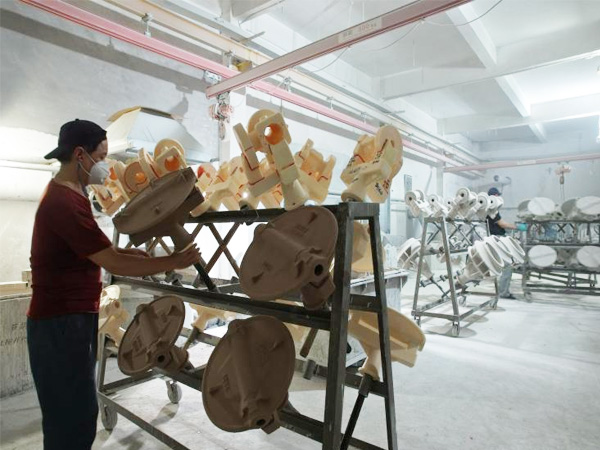
Wax injection molds produce high-fidelity patterns. Patterns can be standalone or assembled into trees, which allows multiple parts to be cast simultaneously, improving efficiency.
Case Study: A European aerospace supplier produces 50 turbine blades per wax tree, reducing cycle time and labor costs by 40%.
3.2 Ceramic Shell Building
Wax patterns are repeatedly dipped in ceramic slurry and coated with fine refractory powders. Layers are applied until the shell is thick enough to handle molten metal.
Technical Note: Shell thickness usually ranges from 8–15 mm, depending on part size and alloy.
3.3 Dewaxing and Shell Firing
The ceramic shell is heated to remove wax (dewaxing), leaving a hollow cavity. This process can occur in an autoclave or furnace. Subsequent firing strengthens the shell to withstand high-temperature metal pouring.
Data Insight: Controlled firing reduces micro-cracking and ensures less than 0.05% porosity in critical aerospace components.
3.4 Metal Pouring and Cooling
Molten metal is poured into the ceramic shell under gravity or vacuum-assisted conditions. Investment casting allows high-melting-point alloys such as superalloys for turbine engines.
Fact: Cooling rates are carefully controlled to prevent shrinkage defects. Advanced foundries use thermocouples and infrared sensors to monitor temperature gradients.
3.5 Shell Removal and Finishing
After cooling, ceramic shells are mechanically or chemically removed. Minimal post-processing is needed, but some parts may undergo grinding, machining, heat treatment, or surface coating to meet exact specifications.
Example: A medical device company produces surgical implants with surface roughness below 1.5 μm using investment casting, eliminating additional machining.
Step 4: Advantages of Investment Casting
4.1 High Precision and Complex Shapes
Investment casting allows for thin walls, intricate features, and internal cavities, making it ideal for aerospace and medical applications.
4.2 Material Versatility
Almost any metal, including high-performance alloys like Inconel and Hastelloy, can be cast, offering flexibility in engineering design.
4.3 Superior Surface Finish
The process produces a smooth surface finish (Ra 1–3 μm), reducing post-processing and improving component fatigue life.
Step 5: Investment Casting vs Other Casting Methods
| Feature | Investment Casting | Sand Casting | Die Casting |
|---|---|---|---|
| Precision | Very High (±0.1 mm) | Moderate (±1–2 mm) | High (±0.2 mm) |
| Surface Finish | Smooth (Ra 1–3 μm) | Rough | Smooth |
| Complexity | Intricate & thin walls | Simple & thick | Moderate |
| Material Variety | Wide, including superalloys | Limited | Mostly non-ferrous |
| Cost | Higher per part | Low | Moderate |
| Batch Size | Small to medium | Large | Large |
Key Insight: Investment casting is preferred for high-value, complex, or safety-critical parts, despite higher initial costs.
Step 6: Common Applications
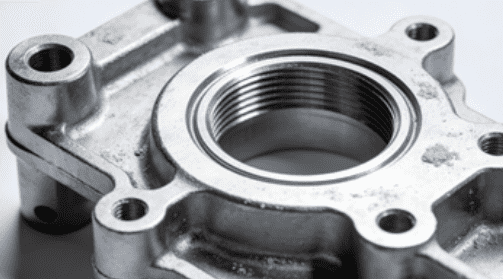
- Aerospace: turbine blades, combustion chambers, structural brackets
- Automotive: valve bodies, gear components, high-performance parts
- Medical: surgical instruments, orthopedic implants, dental prosthetics
- Industrial: pumps, valves, heat exchangers, decorative components
Case Study: A US aerospace supplier reduced weight by 12% and improved performance by 15% using investment casting for titanium brackets.
Step 7: Cost, Scalability, and Sustainability
Cost Factors
Investment casting costs depend on material, complexity, size, batch quantity, and finishing requirements. While the per-part cost is higher than sand casting, reduced machining and fewer defects lower overall production expenses.
Sustainability Practices
Modern foundries adopt wax recycling, ceramic reuse, and energy-efficient kilns. Investment casting also reduces scrap metal, contributing to environmentally responsible manufacturing.
Example: A Spanish foundry reported a 35% reduction in carbon footprint by switching to reusable ceramic shells and recycled wax.
Step 8: Automation and Industry Trends
Emerging Technologies
- Robotic shell coating and dewaxing improves consistency
- 3D-printed wax patterns allow for rapid prototyping and design flexibility
- Real-time sensors for thermal monitoring reduce defects
Industry Insight: According to Global Metal Casting Report, automated investment casting is projected to grow 8% annually, driven by aerospace and medical demand.
Conclusion
Investment casting remains a cornerstone of precision manufacturing. Its ability to produce complex, high-precision components from a wide range of materials makes it invaluable across aerospace, medical, automotive, and industrial applications. Understanding what is investment casting empowers engineers and buyers to select the right method for quality, efficiency, and sustainability.
With emerging technologies like 3D-printed wax patterns, robotic automation, and real-time monitoring, investment casting is set to remain a leading method for high-performance, precision metal parts well into the future.
FAQ
Q1: How does investment casting differ from 3D printing?
A: Investment casting produces functional metal parts directly, while 3D printing often creates patterns or prototypes.
Q2: Can investment casting handle small or large production runs?
A: Yes, it is ideal for small to medium batches, especially high-value or complex components.
Q3: What metals can be used?
A: Stainless steel, aluminum, titanium, cobalt-chrome, bronze, superalloys.
Q4: Is investment casting environmentally sustainable?
A: Modern methods recycle wax, ceramic shells, and use energy-efficient furnaces.
Q5: How accurate is investment casting?
A: Dimensional tolerance can be ±0.1 mm, and surface roughness as smooth as Ra 1–3 μm.
Product Categories
- Valve Parts
- Water Pump Parts
- Bearing Box Parts
- Die Casting Parts
- Stainless Steel Pump Products
- Cast Iron Pump Products
- Valve Parts For Automobile Use
- Auto Parts
- Valve Parts For Civil Use
- Vacuum Pump Parts KF

Let’s start your next project!
Start Your Project with Leierwo
1. Submit Your Inquiry
2. Cost Calculation
3. Start Production
4. Arrange Delivery
FAQ
Yes, we have extensive experience in international trade and can assist customers with export customs clearance and shipping arrangements. We offer various trade terms such as FOB, CIF, and DDP to accommodate different logistics needs.We accept various international payment methods, including T/T (Telegraphic Transfer), wire transfer, and Letter of Credit (L/C). Payment terms can be discussed with our sales team.
By partnering with Leierwo, you can enjoy competitive pricing and superior quality compared to other suppliers. Additionally, we offer a one-stop solution to deliver finished parts, including CNC machining and surface treatment, ensuring a seamless production process.
We have advanced casting equipment and strict quality control systems. Our monthly production capacity is substantial, and we can manufacture products based on customer-provided drawings or samples. We accept both small trial orders and large-scale production.
Our products comply with international standards such as ASTM, AISI, DIN, and JIS. We can provide material test reports and relevant certifications to ensure product quality meets customer requirements.
We strictly follow the ISO 9001 quality management system and conduct multiple inspections throughout the production process, including spectrographic analysis, X-ray testing, ultrasonic testing, and dimensional measurements. These quality control measures guarantee that our castings meet the highest standards.
Our MOQ depends on the product type and complexity, However, we are flexible and open to discussing your specific needs.
Our standard production lead time is 4-6 weeks, depending on order quantity and product complexity. We strive to shorten delivery times to meet customer demands.
Yes, we can provide samples for quality inspection. Sample costs and shipping fees can be negotiated, and sample fees may be refunded upon placing a formal order.
 English
  Spanish
  Arabic
  Malay
Malay  German