
Difference Between Casting and Forging: Key Insights
Welcome to My Blog!
I’m thrilled to have you here! Before we dive into the content, I’d love for you to join me on my social media platforms. It’s where I share extra insights, connect with our amazing community, and keep you updated on the latest news. Here’s how you can stay connected:
📘 Facebook: Shanghai Leierwo Industry Trade Co., Ltd.
Now, let’s embark on this journey together! I hope you find the content here not only insightful but also inspiring and valuable. Let’s get started!
Table of Contents
Key Takeaways of This Blog
- Understand the difference between casting and forging in modern manufacturing
- Mechanical properties, metallurgical concepts, and material performance
- Advantages, limitations, cost, and industrial applications of both processes
- Expert insights, engineering standards, and real-world data
- A detailed comparison table for practical decision-making
- FAQ addressing common Google search and conversational queries
Introduction
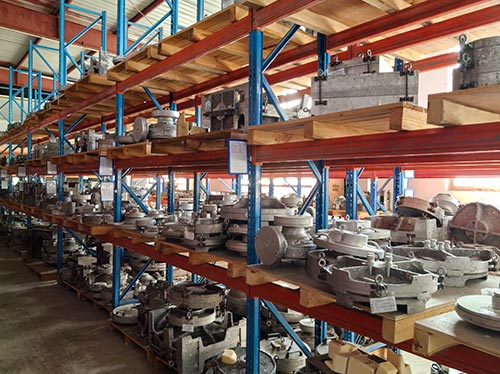
Choosing the right manufacturing process can make or break a product’s performance. Engineers, designers, and procurement teams frequently ask: what is the difference between casting and forging, and which process is right for my application?
Casting and forging are two of the oldest and most widely used methods for shaping metals, yet their outcomes, properties, and applications differ significantly. A single poor choice can result in material failure, higher costs, or reduced product lifespan.
In this article, we explore both processes in depth, provide data-driven comparisons, include expert opinions, and examine industrial standards to help you make informed decisions.
What Is Casting?
Casting is a traditional manufacturing process in which molten metal is poured into a mold and allowed to solidify into a specific shape. This method has been used for centuries to produce components ranging from simple tools to complex industrial machinery. Casting is particularly valued for its ability to create parts with intricate geometries that would be difficult or impossible to manufacture through other methods.
Core Idea – Mold-Based Manufacturing
The primary principle behind casting is mold-based shaping. The mold determines the final geometry of the component, allowing engineers to create intricate internal cavities, thin walls, or decorative patterns. Unlike other methods, casting enables rapid prototyping of new designs, reducing the time between concept and production. For medium to large-scale production, casting can be highly efficient, as multiple molds or cores can be used to produce consistent parts.
Material Considerations for Casting
Casting is compatible with a wide range of metals, including steel, aluminum, iron, and bronze. The mechanical properties of cast components are influenced by several factors: the cooling rate, the type of mold material, and the specific alloy composition. For instance, slower cooling can increase ductility but may reduce overall strength, while faster cooling produces harder, more brittle parts.
Despite its versatility, casting has potential issues such as porosity, shrinkage, and inclusions. These defects can weaken the material and affect performance, which is why quality control measures like X-ray inspection, ultrasonic testing, and careful mold design are essential.
Applications of Casting
Casting is widely used for parts that require complex shapes rather than extreme strength. Common applications include engine blocks, pump housings, valves, and artistic sculptures. In many cases, cast parts undergo secondary machining to achieve precise dimensions, especially when used in machinery or automotive components.
What Is Forging?
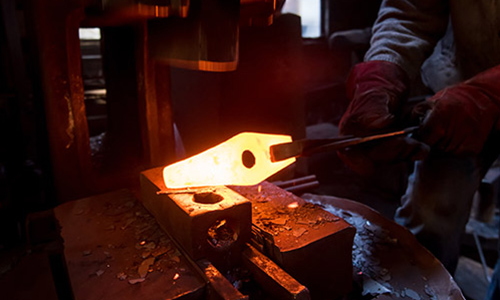
Forging is a process in which metal is shaped by applying compressive forces, typically using hammers, presses, or dies. Unlike casting, forging relies on mechanical deformation rather than pouring molten metal into a mold. This approach results in components with a refined grain structure, which enhances mechanical properties and reduces the likelihood of internal defects.
Core Idea – Deformation-Based Strength
The essence of forging is improving the internal structure of the metal through controlled deformation. When metal is forged, the grains align in the direction of the applied force, which enhances tensile strength, fatigue resistance, and toughness. This alignment also reduces voids, inclusions, and other microstructural defects that can occur in cast metals, making forged components ideal for high-stress applications.
Forging Techniques
There are several techniques within forging, each suited to different applications:
- Open-die forging: This method involves shaping metal between flat or simple-shaped dies. It is ideal for large, custom-shaped parts such as shafts or structural beams.
- Closed-die forging: Metal is compressed in precisely machined dies, producing repeatable shapes with high dimensional accuracy. This technique is common in automotive and aerospace components.
- Roll forging: Metal passes through rolling dies to reduce cross-section or elongate material. This process is efficient for producing rods, bars, and elongated components with uniform properties.
Applications of Forging
Forging is widely used for components that must withstand heavy loads, high stress, or repeated cycling. Examples include crankshafts, connecting rods, gears, turbine shafts, and landing gear components in aerospace. In these applications, the enhanced mechanical properties provided by forging make it far more reliable than casting.
Mechanical Properties: Casting vs Forging
Strength and Durability
One of the most significant differences between casting and forging is mechanical strength. Forged components often exhibit tensile strength up to 20–50% higher than their cast counterparts. This advantage is due to the directional grain flow achieved during forging, which also improves resistance to fatigue and mechanical shocks. Cast components, while suitable for low- to medium-stress applications, are generally more prone to brittle failure under heavy loads.
Material Density and Defects
Casting can result in porosity or microscopic inclusions that reduce density and may compromise mechanical integrity. In contrast, forging produces denser and more uniform materials with fewer internal voids. For example, a 2022 study published in the Journal of Materials Engineering demonstrated that forged steel gears withstand approximately 30% more load cycles than cast gears of identical dimensions, highlighting the reliability of forged components under repeated stress.
Dimensional Accuracy
Dimensional accuracy also differs between the two processes. Cast parts often require secondary machining to achieve precise tolerances, as shrinkage and mold imperfections can alter the final geometry. Forged parts, especially those produced with closed-die techniques, have excellent dimensional consistency and often require less post-processing. This advantage is particularly valuable in high-precision industries like aerospace and automotive manufacturing.
Surface Finish and Post-Processing
While casting allows for complex shapes, the surface finish is typically rougher, requiring polishing, machining, or coating. Forging usually results in smoother surfaces due to die contact and compression, though additional machining may still be necessary for precise features.
Cost, Efficiency, and Production Considerations
Casting
- Lower initial tooling cost for complex parts
- Faster lead time for prototypes
- Material utilization is efficient for hollow or intricate components
Forging
- Higher initial tooling and die costs
- Lower per-unit cost for high-volume, high-strength parts
- Longer setup but superior performance for critical mechanical applications
Environmental Considerations
- Casting may require more energy for melting and mold production
- Forging consumes energy mainly in mechanical deformation, often more sustainable for long-lasting, high-strength parts
Comparison Table: Casting vs Forging
| Feature | Casting | Forging |
|---|---|---|
| Process | Molten metal poured into mold | Metal shaped under compressive force |
| Strength | Moderate | High |
| Fatigue Resistance | Lower | Higher (20–50% improvement) |
| Material Density | Porosity possible | Uniform, dense |
| Shape Complexity | Excellent | Limited to die capacity |
| Dimensional Accuracy | Moderate | High |
| Cost | Lower tooling cost, faster prototypes | Higher initial cost, lower per-part cost for volume |
| Typical Applications | Engine blocks, housings, decorative parts | Crankshafts, gears, connecting rods, shafts |
| Energy Usage | High for melting | Moderate for deformation |
| Sustainability | Depends on mold material | Often better for durable, high-stress parts |
Advantages of Casting
Design Flexibility
Casting allows for intricate shapes, internal channels, and thin walls that forging cannot easily achieve.
Cost-Effectiveness for Complex Parts
Lower tooling costs make casting attractive for low-to-medium volume production.
Rapid Prototyping
Casting supports early-stage development, allowing faster iteration before investing in forging dies.
Advantages of Forging
Superior Mechanical Properties
- Forged components handle dynamic loads, shocks, and fatigue more effectively
- Grain structure alignment improves toughness and reliability
Reduced Defects
Fewer voids and inclusions lead to longer-lasting parts in critical applications
Industry Endorsement
- According to ASM International, forged parts are preferred in aerospace, automotive, and high-stress industrial equipment due to higher performance under operational stress
Limitations
Casting
- Potential porosity or shrinkage defects
- Lower mechanical strength for high-load components
- Secondary machining may be required for precision
Forging
- Limited geometric complexity
- High initial tooling costs
- Not ideal for hollow or extremely intricate components
Applications Based on Difference Between Casting and Forging
Understanding the difference between casting and forging is essential when selecting materials and processes for specific industrial applications. Each method offers unique advantages, and choosing the right one ensures durability, performance, and cost-effectiveness.
Automotive Industry
In the automotive sector, the choice between casting and forging depends largely on mechanical demands and production volume.
- Forging: High-stress components such as crankshafts, gears, and connecting rods are typically forged. These parts must endure repeated cyclic loads and shock, and forging provides superior tensile strength, fatigue resistance, and reliability under these conditions. For example, forged steel crankshafts can handle up to 30% higher load cycles compared to cast equivalents.
- Casting: Engine blocks, cylinder heads, and housings are often cast. Casting allows for complex geometries, integrated cooling channels, and lightweight designs, which would be difficult or costly to achieve with forging. Additionally, casting enables efficient production of medium- to high-volume parts with consistent shape accuracy.
Aerospace Industry
Aerospace components often operate under extreme loads and safety-critical conditions, making process selection crucial.
- Forging: Landing gear, turbine shafts, and other high-stress structural parts are forged due to the process’s ability to improve grain flow and mechanical alignment, which enhances toughness and fatigue resistance. Forged aerospace components can handle higher stress and dynamic loads, ensuring safety and longevity.
- Casting: Turbine casings, brackets, and certain housings are typically cast, as the process allows for complex internal features and lightweight structures that would be difficult to forge. Investment casting, in particular, is widely used to produce high-precision aerospace parts with intricate designs.
Industrial Machinery
Heavy machinery relies on components that can withstand sustained loads, vibration, and wear.
- Forging: Shafts, presses, and heavy-duty gears are commonly forged. Forging improves density and uniformity, reducing the risk of mechanical failure and extending service life in demanding industrial applications. For example, forged steel shafts in presses can endure millions of operational cycles without significant deformation.
- Casting: Pump housings, valve bodies, and frames with complex shapes are often cast. Casting enables cost-effective production of intricate components that would otherwise require extensive machining from solid blocks. It is particularly beneficial for large, complex assemblies where design flexibility is essential.
Emerging Applications and Trends
Modern industries increasingly use hybrid approaches that combine casting and forging to optimize performance and cost. For example:
- Aerospace brackets may be cast for shape complexity and then forged locally for critical load-bearing areas.
- Automotive lightweight aluminum engine blocks may be cast, while connecting rods and gears remain forged to handle mechanical stress.
These strategies reflect an industry-wide understanding that knowing the difference between casting and forging is not just theoretical but essential for achieving optimal mechanical performance, reliability, and efficiency.
Conclusion
Understanding the difference between casting and forging is essential for engineers, manufacturers, and buyers.
- Casting: Best for complex shapes, low-to-medium stress, and rapid prototyping
- Forging: Best for high-strength, high-load, fatigue-critical components
By analyzing material properties, production volume, cost, and application requirements, industrial teams can choose the right process to maximize performance, reliability, and efficiency.
FAQ
Which is stronger: casting or forging?
Forging produces stronger, more durable parts due to aligned grain flow and lower porosity.
Is casting better for complex shapes?
Yes, casting allows for intricate geometries and hollow structures that are difficult or impossible to forge.
Which process is more cost-effective?
Casting has lower initial tooling cost, but forging is more economical for high-volume, high-strength applications.
Can forged parts be used in critical aerospace components?
Absolutely; aerospace relies heavily on forging for landing gear, turbine shafts, and high-load structures.
Does casting require secondary machining?
Often, yes. Casting can produce near-net-shape parts, but precision features usually require additional machining.
Product Categories
- Valve Parts
- Water Pump Parts
- Bearing Box Parts
- Die Casting Parts
- Stainless Steel Pump Products
- Cast Iron Pump Products
- Valve Parts For Automobile Use
- Auto Parts
- Valve Parts For Civil Use
- Vacuum Pump Parts KF

Let’s start your next project!
Start Your Project with Leierwo
1. Submit Your Inquiry
2. Cost Calculation
3. Start Production
4. Arrange Delivery
FAQ
Yes, we have extensive experience in international trade and can assist customers with export customs clearance and shipping arrangements. We offer various trade terms such as FOB, CIF, and DDP to accommodate different logistics needs.We accept various international payment methods, including T/T (Telegraphic Transfer), wire transfer, and Letter of Credit (L/C). Payment terms can be discussed with our sales team.
By partnering with Leierwo, you can enjoy competitive pricing and superior quality compared to other suppliers. Additionally, we offer a one-stop solution to deliver finished parts, including CNC machining and surface treatment, ensuring a seamless production process.
We have advanced casting equipment and strict quality control systems. Our monthly production capacity is substantial, and we can manufacture products based on customer-provided drawings or samples. We accept both small trial orders and large-scale production.
Our products comply with international standards such as ASTM, AISI, DIN, and JIS. We can provide material test reports and relevant certifications to ensure product quality meets customer requirements.
We strictly follow the ISO 9001 quality management system and conduct multiple inspections throughout the production process, including spectrographic analysis, X-ray testing, ultrasonic testing, and dimensional measurements. These quality control measures guarantee that our castings meet the highest standards.
Our MOQ depends on the product type and complexity, However, we are flexible and open to discussing your specific needs.
Our standard production lead time is 4-6 weeks, depending on order quantity and product complexity. We strive to shorten delivery times to meet customer demands.
Yes, we can provide samples for quality inspection. Sample costs and shipping fees can be negotiated, and sample fees may be refunded upon placing a formal order.
 English
  Spanish
  Arabic
  Malay
Malay  German