
Ductile Iron Castings Quality Checklist: A Practical Guide for Buyers
Welcome to My Blog!
I’m thrilled to have you here! Before we dive into the content, I’d love for you to join me on my social media platforms. It’s where I share extra insights, connect with our amazing community, and keep you updated on the latest news. Here’s how you can stay connected:
📘 Facebook: Shanghai Leierwo Industry Trade Co., Ltd.
Now, let’s embark on this journey together! I hope you find the content here not only insightful but also inspiring and valuable. Let’s get started!
Table of Contents
Key Points
- Understand the essential quality indicators of ductile iron castings
- Learn how to inspect raw material, microstructure, mechanical properties, and dimensions
- Compare ductile iron castings with gray iron and steel to guide buying decisions
- Identify common casting defects and prevention methods
- Learn real factory inspection techniques and testing standards
- Get a complete quality checklist for procurement and quality control
- Understand how to evaluate suppliers based on certifications, process, and traceability
Introduction
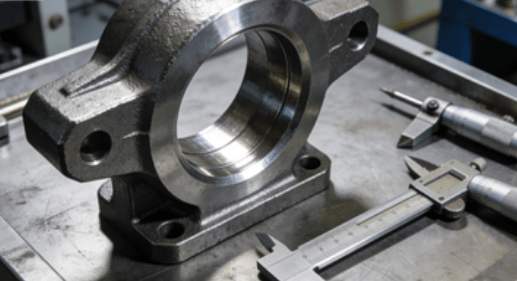
Imagine your factory receives a batch of ductile iron castings for valve bodies, pump housings, or automotive parts. At first glance, everything seems normal. But after a few weeks in service, several parts fail due to cracks, internal porosity, or low tensile strength. The cost is not only the replacement parts, but also downtime, labor, and reputation loss.
This scenario happens frequently because buyers often rely on price or appearance alone. In reality, ductile iron castings are highly dependent on metallurgical structure, heat treatment, and process control. A strong quality checklist is the difference between a reliable supply chain and constant production risk.
This guide is designed for procurement managers, engineers, and quality professionals. It provides a complete checklist and practical steps to evaluate ductile iron castings. You will learn what to check, how to verify it, and how to avoid common mistakes.
What Are Ductile Iron Castings
Definition and Basic Concept
Ductile iron castings are iron alloys that contain spherical graphite nodules. The graphite shape changes from flake to nodular through nodulizing treatment. This change significantly improves strength and ductility.
Why Ductile Iron Castings Are Widely Used
Ductile iron castings are widely used because they offer:
- High tensile strength and impact resistance
- Good fatigue performance
- Excellent machinability
- Cost efficiency compared to steel
The Key Metallurgical Feature
The key feature is the graphite nodules. If nodules are not uniform or are irregular, the casting will lose ductility and become brittle. This is why microstructure inspection is essential.
Why Quality Matters in Ductile Iron Castings
Reliability and Safety
Ductile iron castings are often used in pressure systems, structural components, and moving parts. Failure can cause:
- Equipment shutdown
- Safety incidents
- Significant economic loss
Cost Control and Long Term Performance
Poor quality castings lead to:
- High scrap rates
- Rework and machining waste
- Short service life
- Increased maintenance frequency
Market Demand and Product Performance
In modern industrial applications, customers demand stable performance and long life. Ductile iron castings with unstable quality cannot meet these requirements.
Ductile Iron Castings Quality Checklist

Material and Chemical Composition Check
What to Verify
Chemical composition determines the final performance. Key elements include:
- Carbon
- Silicon
- Manganese
- Magnesium
- Sulfur
- Phosphorus
Acceptable Ranges
Typical composition ranges for ductile iron castings:
- Carbon 3.2 to 3.8
- Silicon 1.8 to 3.0
- Manganese 0.1 to 0.6
- Magnesium 0.03 to 0.05
- Sulfur less than 0.03
- Phosphorus less than 0.05
Why This Matters
If magnesium is insufficient, graphite will form as flakes and the casting will become brittle. If sulfur is too high, nodules cannot form properly.
Microstructure Inspection
Graphite Nodules and Matrix
Microstructure inspection should include:
- Nodule count per square millimeter
- Nodule shape and size
- Matrix structure such as ferrite, pearlite, or martensite
What High Quality Looks Like
High quality ductile iron castings show:
- Uniform nodules
- Nodule count typically above 30 per square millimeter
- Minimal carbide content
Heat Treatment Effects
Heat treatment such as normalizing improves toughness and stability. A proper heat treatment will:
- Refine grain size
- Reduce residual stress
- Improve ductility
Mechanical Properties Verification
Tensile Strength and Elongation
Common mechanical properties for ductile iron castings:
- Tensile strength 400 to 700 MPa
- Elongation 10 to 25 percent
- Hardness 170 to 300 HB
Why This Matters
Mechanical properties indicate the casting can withstand real world load and stress. Low elongation means the casting is brittle and may crack under impact.
Dimensional and Surface Inspection
Dimensional Accuracy
Use tools such as:
- Calipers
- Micrometers
- CMM coordinate measuring machine
- Laser scanning
Surface Quality
Check for:
- No cracks
- No sand holes
- Smooth surface
- Correct machining marks
Dimensional Tolerance
Typical tolerance depends on casting size and complexity. Common standards are:
- ISO 8062 for dimensional tolerances
- GB standards for casting tolerances
Non Destructive Testing NDT
Common NDT Methods
- Magnetic particle testing
- Ultrasonic testing
- Dye penetrant testing
- X ray inspection
When to Use NDT
NDT is required for critical components such as:
- Valve bodies
- Pump housings
- Pressure pipe fittings
- Automotive load bearing parts
What NDT Reveals
NDT can detect:
- Internal porosity
- Cracks
- Inclusions
- Cold shuts
Comparison Ductile Iron Castings vs Gray Iron vs Steel
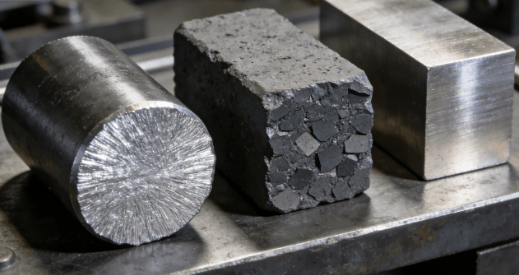
Strength and Toughness Comparison
Ductile iron castings provide a balanced performance between gray iron and steel.
| Material | Strength | Ductility | Cost | Best For |
|---|---|---|---|---|
| Ductile iron castings | High | High | Medium | Valves, gears, housings |
| Gray iron | Medium | Low | Low | Basic casings |
| Steel | Very high | Medium | High | Heavy duty components |
Why Buyers Choose Ductile Iron Castings
- Better toughness than gray iron
- More cost effective than steel
- Excellent machinability
- High fatigue resistance
Common Defects and How to Identify Them
Porosity
Porosity is caused by gas trapped in the casting or shrinkage. It reduces strength and causes leakage in pressure parts.
Cold Shuts and Inclusions
Cold shuts occur when molten metal does not fuse properly. Inclusions are non metallic impurities. Both reduce strength and may cause cracks.
Cracks and Warping
Cracks often occur during cooling or machining. Warping indicates uneven stress distribution or poor heat treatment.
How to Prevent Defects
- Ensure correct melt temperature
- Use proper gating system
- Control mold permeability
- Use proper inoculation and nodulizing process
- Conduct heat treatment correctly
Real Factory Inspection Checklist
Melting Furnace and Metal Treatment
- Check furnace type and temperature control
- Verify nodulizing and inoculation process
- Inspect raw material source and traceability
Molding and Casting Process
- Check sand quality and molding accuracy
- Verify mold curing time
- Inspect gating and riser design
Heat Treatment Facility
- Confirm heat treatment temperature and time
- Check cooling method and equipment
- Verify temperature control and records
Quality Inspection Laboratory
- Check availability of spectrometer
- Verify tensile testing machine
- Confirm metallographic microscope
- Check NDT equipment
Industry Standards and Quality Requirements
Common Standards Used in Ductile Iron Castings
- ISO 1083 ductile iron standard
- ASTM A536 ductile iron casting standard
- GB 1348 ductile iron standard
- EN 1563 ductile iron casting standard
Typical Quality Requirements for Critical Components
For pressure components and heavy machinery, quality requirements often include:
- Tensile strength above 500 MPa
- Elongation above 12 percent
- NDT inspection for all parts
- Strict dimensional control
Expert Opinions and Industry Insights
Metallurgy Expert View
A senior metallurgist from a leading casting company said:
“Graphite morphology determines the ductile iron casting quality. Even with correct composition, poor nodulizing will lead to flaky graphite and brittle failure.”
Engineering Expert View
A mechanical engineer working in pump manufacturing said:
“Material testing and microstructure inspection must be done before mass production. Many failures are caused by inconsistent microstructure and poor heat treatment.”
Quality Manager View
A quality manager in valve manufacturing said:
“Traceability and documentation are essential. If the supplier cannot provide heat treatment report and NDT report, the casting should not be accepted.”
How to Choose a Reliable Supplier
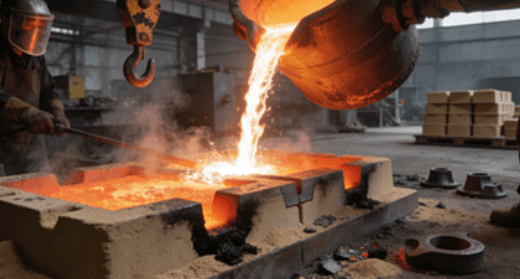
Supplier Evaluation Checklist
- Production capacity and stable output
- Technical team and quality management
- Test equipment and inspection system
- Ability to provide full documentation
- ISO and industry certifications
Key Supplier Questions
- How do you control nodulizing process
- What is your defect rate and scrap rate
- Do you have NDT capability
- Can you provide sample testing
- What is your heat treatment process
Practical Buyer Checklist
Before Purchase
- Verify material certificate
- Confirm chemical composition
- Check mechanical properties
- Review microstructure report
- Confirm dimensional tolerance
After Receiving Goods
- Conduct sample testing
- Perform visual inspection
- Check surface finish
- Verify NDT results
- Check packaging and transportation protection
Practical Application and Cost Control
How Quality Impacts Cost
High quality ductile iron castings may cost more initially but reduce:
- Rework cost
- Scrap cost
- Failure cost
- Maintenance cost
Long Term Performance
A high quality ductile iron casting can last 10 to 20 years in many applications such as water valves, pump housings, and structural parts.
Additional Comparison Tables
Material Performance Comparison
| Property | Ductile Iron Castings | Gray Iron | Steel |
|---|---|---|---|
| Tensile strength | High | Medium | Very high |
| Ductility | High | Low | Medium |
| Fatigue resistance | High | Low | High |
| Cost | Medium | Low | High |
| Machinability | Good | Good | Medium |
Inspection Priority Table
| Inspection Type | Priority | Why |
|---|---|---|
| Chemical composition | High | Determines final properties |
| Microstructure | High | Determines ductility and strength |
| Mechanical test | High | Confirms performance |
| NDT | Medium to High | Critical parts need internal inspection |
| Dimensional check | High | Ensures fit and function |
Conclusion
Ductile iron castings quality is determined by multiple factors including composition, microstructure, mechanical properties, and manufacturing process control. For buyers, a comprehensive checklist is essential to ensure reliability and long term performance.
By following this guide, you can:
- Reduce defects and failure risk
- Improve production stability
- Control cost effectively
- Ensure safe and reliable performance
If you want, I can also help you:
- Create a custom supplier evaluation checklist
- Write a factory audit template
- Recommend inspection standards based on your application
Just tell me your application and requirements, and I will tailor the guide to your needs.
FAQ
What is the most important factor in ductile iron castings quality
The most important factor is microstructure, especially graphite nodules and matrix distribution. It directly determines strength and ductility.
How can I ensure the casting meets mechanical requirements
Request tensile test, hardness test, and microstructure report. Compare results with your design standards.
Why is NDT important for ductile iron castings
NDT detects internal defects such as porosity, cracks, and inclusions that cannot be seen visually. For pressure parts, NDT is mandatory.
How to choose between ductile iron castings and steel
Choose ductile iron castings if you need high toughness, good fatigue resistance, and cost efficiency. Choose steel for extreme strength and high temperature applications.
How long do ductile iron castings last
Under normal conditions, high quality ductile iron castings can last 10 to 20 years. In harsh environments, proper coating and maintenance are required.
Product Categories
- Valve Parts
- Water Pump Parts
- Bearing Box Parts
- Die Casting Parts
- Stainless Steel Pump Products
- Cast Iron Pump Products
- Valve Parts For Automobile Use
- Auto Parts
- Valve Parts For Civil Use
- Vacuum Pump Parts KF

Let’s start your next project!
Start Your Project with Leierwo
1. Submit Your Inquiry
2. Cost Calculation
3. Start Production
4. Arrange Delivery
FAQ
Yes, we have extensive experience in international trade and can assist customers with export customs clearance and shipping arrangements. We offer various trade terms such as FOB, CIF, and DDP to accommodate different logistics needs.We accept various international payment methods, including T/T (Telegraphic Transfer), wire transfer, and Letter of Credit (L/C). Payment terms can be discussed with our sales team.
By partnering with Leierwo, you can enjoy competitive pricing and superior quality compared to other suppliers. Additionally, we offer a one-stop solution to deliver finished parts, including CNC machining and surface treatment, ensuring a seamless production process.
We have advanced casting equipment and strict quality control systems. Our monthly production capacity is substantial, and we can manufacture products based on customer-provided drawings or samples. We accept both small trial orders and large-scale production.
Our products comply with international standards such as ASTM, AISI, DIN, and JIS. We can provide material test reports and relevant certifications to ensure product quality meets customer requirements.
We strictly follow the ISO 9001 quality management system and conduct multiple inspections throughout the production process, including spectrographic analysis, X-ray testing, ultrasonic testing, and dimensional measurements. These quality control measures guarantee that our castings meet the highest standards.
Our MOQ depends on the product type and complexity, However, we are flexible and open to discussing your specific needs.
Our standard production lead time is 4-6 weeks, depending on order quantity and product complexity. We strive to shorten delivery times to meet customer demands.
Yes, we can provide samples for quality inspection. Sample costs and shipping fees can be negotiated, and sample fees may be refunded upon placing a formal order.
 English
  Spanish
  Arabic
  Malay
Malay  German