
5 Powerful Sand Casting Equipment Machines
Welcome to My Blog!
I’m thrilled to have you here! Before we dive into the content, I’d love for you to join me on my social media platforms. It’s where I share extra insights, connect with our amazing community, and keep you updated on the latest news. Here’s how you can stay connected:
📘 Facebook: Shanghai Leierwo Industry Trade Co., Ltd.
Now, let’s embark on this journey together! I hope you find the content here not only insightful but also inspiring and valuable. Let’s get started!
Table of Contents
Introduction
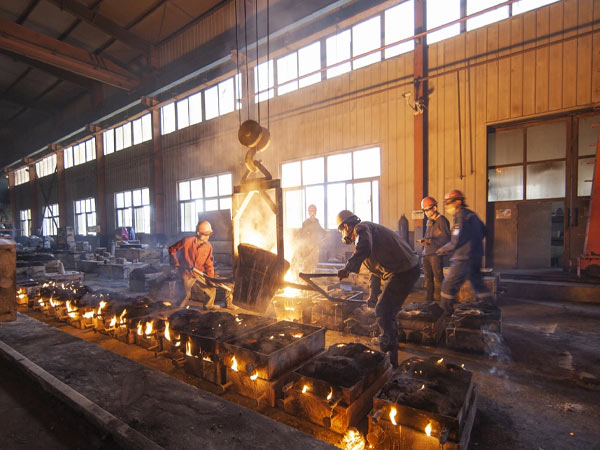
Sand casting remains one of the most versatile and widely used methods for producing metal components across various industries, from automotive and aerospace to energy and machinery manufacturing. The process involves pouring molten metal into a mold made from sand, allowing it to cool, solidify, and form precise components. The quality, consistency, and efficiency of the final casting depend heavily on the performance of sand casting equipment.
Modern foundries increasingly rely on automated systems and specialized machines to maintain uniformity, minimize defects, and optimize production cycles. As Dr. Li Ming, a senior metallurgist at the China Foundry Research Center, explains:
“The integration of advanced sand preparation, molding, core making, and automated pouring equipment has transformed casting from a traditional craft to a high-precision industrial process. Modern machines allow for complex geometries and consistent properties that were previously difficult to achieve.”
In this article, we explore the five most powerful sand casting equipment machines used today, their working principles, benefits, and how they contribute to overall foundry efficiency.
1. Sand Preparation Equipment: The Foundation of Casting Quality
The quality of molding sand directly influences the structural integrity and surface finish of castings. Proper sand preparation ensures uniformity, correct moisture content, and optimal binder strength. Inconsistent sand properties can cause defects such as blowholes, cracks, or warping during metal pouring and solidification.
Key Machines and Their Functions
- Sand Mixers: Modern sand mixers combine silica sand, clay, chemical binders, and additives to produce consistent molding sand. High-precision mixers offer digital control of moisture, mixing speed, and duration, enabling reproducible mold properties. Some advanced models include real-time moisture sensors and automatic binder dosing systems to adapt to different alloys and mold designs.
- Sand Dryers: Moisture control is crucial to prevent steam explosions and poor casting surfaces. Rotary drum dryers, fluidized bed dryers, and vibrating dryers allow foundries to maintain optimal moisture levels for various sand types. For instance, silica sand with 1–2% residual moisture is ideal for iron castings, whereas non-ferrous alloys may require less than 1%.
- Sand Reclaimers: Efficient sand reclamation reduces raw material consumption and environmental impact. Mechanical, thermal, or hybrid reclaimers restore used sand to 90–95% of its original properties. Thermal reclaimers remove binders, while mechanical systems remove oversized particles, providing clean, reusable sand.
Industry Data
A 2023 Global Foundry Association study revealed that foundries employing automated sand preparation equipment reduced casting defects by up to 35%, improved mold consistency, and lowered scrap rates. Cost savings from reclaimed sand can account for 15–20% of raw material expenses annually in high-volume foundries.
Case Study
At a large automotive foundry in Guangzhou, the replacement of manual sand mixing with automated sand mixers decreased production cycle time by 20% while maintaining mold compressive strength above 8 MPa. The uniform sand density improved casting surface finish and reduced post-processing labor by 15%.al Foundry Association highlighted that foundries using automated sand preparation equipment reduced casting defects by up to 35% and improved mold consistency, directly contributing to higher yield and lower scrap rates.
2. Molding Machines: Precision Shapes for Reliable Castings
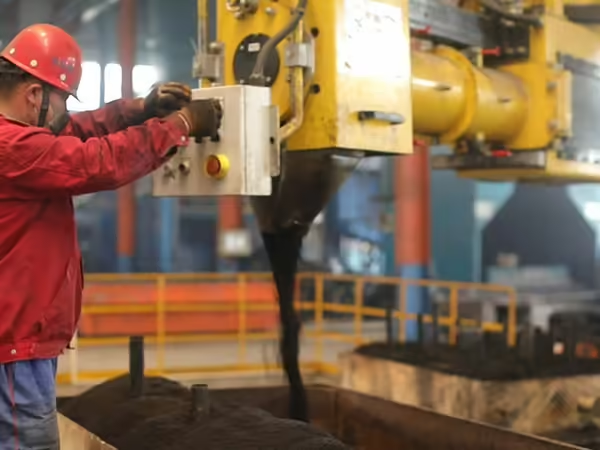
Molding transforms prepared sand into a cavity that forms the shape of the casting. Precision and consistency during this stage are critical for dimensional accuracy, surface quality, and repeatable results.
Types of Molding Machines
- Hand Molding Tools: Still widely used for prototypes or small-batch production, hand molding allows skilled operators to manually shape sand around patterns.
- Flask-Based Systems: Flasks provide structural support for sand molds during compaction and pouring. Proper flask design ensures uniform compaction, minimizing deformation.
- Automatic Molding Machines: These machines integrate sand compaction, pattern placement, and mold release, producing molds at 1–3 minutes per unit. High-volume production benefits from repeatable precision and reduced labor dependency.
Technological Advancements
- Sensor Integration: Real-time monitoring of sand density, moisture, and compaction pressure ensures consistent mold quality.
- Pattern Recognition Systems: CNC-based systems verify correct pattern placement, critical for complex mold geometries.
- 3D-Printed Molds: Additive manufacturing allows molds with intricate internal passages and optimized cooling channels, previously impossible with traditional tooling.
Expert Insight
Professor Zhang Wei, Materials Department at Tsinghua University, notes:
“Automated molding with sensor feedback reduces dimensional variance and allows foundries to maintain tolerances within ±0.5 mm, which is essential for aerospace and automotive components.”
Expanded Application
Modern molding machines can handle high-temperature-resistant sands for non-ferrous alloys, incorporate vibration-assisted compaction for dense molds, and integrate with robotic core insertion systems. These features reduce cycle time, improve mold stability, and enable production of high-quality, complex castings at scale.
3. Core Making Machines: Creating Complex Internal Cavities
Cores are crucial for forming internal passages or hollow features in castings. They require precise control of shape, density, and strength to prevent defects such as core shifting or breakage during metal pouring.
Key Equipment
- Core Shooters: Inject sand-binder mixtures under controlled pressure into core boxes. Advanced shooters offer pressure and velocity control, ensuring uniform density and minimal internal porosity.
- Air Set Machines: Utilize chemical binders and compressed air to produce self-supporting cores. Ideal for complex shapes and high-strength applications.
- Automatic Core Making Lines: Integrate shooting, curing, and finishing into a continuous operation, increasing throughput and reducing labor intensity.
Performance Metrics
- Cycle Time per Core: 2–5 minutes for automated lines
- Dimensional Tolerance: ±0.5 mm
- Core Strength: Up to 15 MPa post-curing
- Binder Cure Time: 10–15 minutes depending on core size and mixture
Industrial Impact
Automated core making lines can increase production capacity by 30–50%, while improving consistency and reducing scrap caused by broken or misaligned cores. They are particularly important in engine manufacturing, pump housings, and valves where internal passages are complex.
4. Pouring and Handling Machines: Safe and Efficient Metal Transfer
Pouring molten metal is one of the most critical and hazardous stages in sand casting. Specialized machines improve safety, accuracy, and efficiency.
Key Pouring Equipment
- Furnaces: Modern foundries use electric induction, gas, or cupola furnaces capable of melting a wide range of ferrous and non-ferrous alloys.
- Ladles and Transport Systems: Automated ladles move molten metal safely to molds, controlling flow rates and minimizing spillage.
- Robotic Pouring Systems: Robots ensure precise pouring, maintaining consistent flow and reducing exposure of personnel to high temperatures.
Advantages
- Improved surface finish and reduced porosity
- Uniform metal filling for complex molds
- Reduced risk of human error and workplace accidents
Industry Insight
The World Foundry Organization reported that foundries using robotic pouring systems reduced metal wastage by 15–20% while improving overall casting consistency, highlighting the operational benefits of advanced sand casting equipment.
Production Data: Comparing Sand Casting Equipment Efficiency
| Equipment Type | Typical Cycle Time | Automation Level | Key Benefit |
|---|---|---|---|
| Sand Mixer | 5–15 minutes | Semi-automatic | Consistent sand quality |
| Automatic Molding Machine | 1–3 minutes/mold | Fully automatic | High-volume precision molding |
| Core Shooter | 2–5 minutes/core | Semi-automatic | Complex internal geometries |
| Electric Induction Furnace | 30–90 minutes | Fully automatic | Rapid alloy melting |
| Robotic Pouring System | 1–2 minutes/mold | Fully automatic | Safety and pouring accuracy |
5. Cooling, Shakeout, and Finishing Machines: Completing the Casting Process

After metal solidifies, post-processing equipment ensures the final product meets dimensional and surface quality requirements.
Key Machines
- Cooling Beds: Allow castings to cool gradually, minimizing thermal stress and preventing cracks.
- Shakeout Machines: Vibratory or impact machines remove sand from castings efficiently.
- Sand Blasters: Clean the casting surface and remove residual sand or scale.
- Grinding and Polishing Machines: Provide surface finishing to meet tight tolerances.
- Inspection Systems: X-ray, ultrasonic, and 3D scanning ensure internal integrity and dimensional accuracy.
Real-World Impact
- Automated shakeout systems reduce labor by 40–50% compared to manual methods.
- High-efficiency sand reclamation reduces material costs by up to 30%.
- Integration with quality control systems ensures 99% compliance with engineering specifications.
Conclusion
Investing in advanced sand casting equipment enhances efficiency, precision, and reliability throughout the foundry process. From sand preparation to finishing, the five key machines—sand mixers, molding machines, core making machines, pouring systems, and post-casting equipment—form the backbone of modern production. Proper utilization reduces defects, shortens lead times, and enables foundries to meet global standards for high-quality metal castings.
With continuous technological advancements, integrating automation, monitoring, and advanced materials handling into sand casting equipment ensures that foundries remain competitive in both cost and quality.
FAQ
Q1: What equipment is essential for a small foundry?
A1: Sand mixers and hand molding tools are critical for small-scale production and prototyping.
Q2: Can all metals be cast using the same sand casting equipment?
A2: Most equipment can handle ferrous and non-ferrous metals, but furnace type, mold binder, and pouring system must match the alloy requirements.
Q3: How does automation affect production efficiency?
A3: Automation reduces cycle time, improves repeatability, lowers labor costs, and enhances safety.
Q4: How is sand recycled in modern foundries?
A4: Sand reclaimers remove impurities, restore particle size, and recover binder content, allowing reuse with minimal performance loss.
Q5: What maintenance is required for sand casting equipment?
A5: Regular cleaning, inspection, sensor calibration, and replacement of wear parts are critical for reliable operation.
Product Categories
- Valve Parts
- Water Pump Parts
- Bearing Box Parts
- Die Casting Parts
- Stainless Steel Pump Products
- Cast Iron Pump Products
- Valve Parts For Automobile Use
- Auto Parts
- Valve Parts For Civil Use
- Vacuum Pump Parts KF

 English
  Spanish
  Arabic
  Malay
Malay  German