
5 Powerful Benefits of China Iron Casting Impeller
Welcome to My Blog!
I’m thrilled to have you here! Before we dive into the content, I’d love for you to join me on my social media platforms. It’s where I share extra insights, connect with our amazing community, and keep you updated on the latest news. Here’s how you can stay connected:
📘 Facebook: Shanghai Leierwo Industry Trade Co., Ltd.
Now, let’s embark on this journey together! I hope you find the content here not only insightful but also inspiring and valuable. Let’s get started!
Table of Contents
Introduction
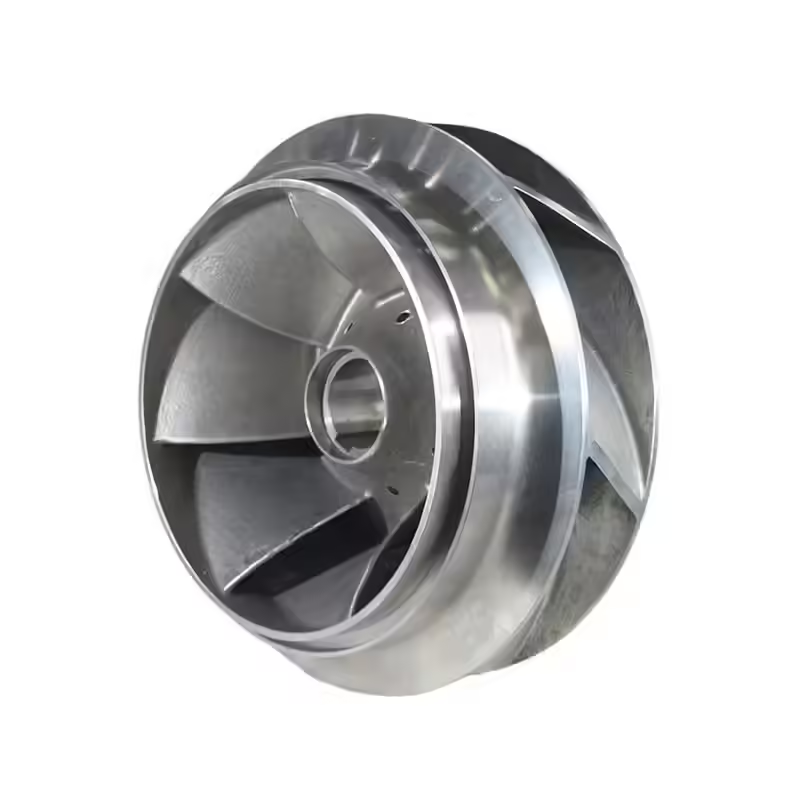
In today’s rapidly evolving industrial landscape, efficiency, reliability, and cost-effectiveness are paramount. Whether it’s for large water treatment plants, chemical processing systems, HVAC infrastructure, or maritime applications, the performance of fluid machinery directly impacts operational success. At the heart of many such systems lies a humble yet crucial component: the impeller.
Among all manufacturing hubs in the global market, China has emerged as a leader in producing high-quality metal components at scale. The China iron casting impeller—a product of centuries-old casting heritage enhanced by modern technology—has become a preferred choice worldwide. From advanced metallurgy to lean manufacturing, Chinese foundries have redefined expectations for industrial impellers.
This article explores five powerful benefits of China iron casting impeller, supported by real-world data and expert insights. We will dive deep into material science, production advantages, performance metrics, and design innovations that make these impellers indispensable in global industries. By the end, you’ll understand not just what these benefits are—but why they matter to engineers, procurement teams, and operations managers.
1. Exceptional Mechanical Strength Backed by Metallurgical Expertise
Mechanical strength is the foundation of impeller performance. The China iron casting impeller harnesses the benefits of ductile iron and gray iron alloys, offering superior load-bearing capacity, fracture resistance, and long-term durability. In industrial applications, where impellers often operate under high rotational speeds and substantial fluid pressures, mechanical failure can lead to significant downtime and repair costs. This makes material selection and casting quality critical.
Why Materials Matter
Ductile Iron Tensile Strength
Modern ductile iron grades used in Chinese impellers (for example, ASTM A536 65-45-12) feature tensile strengths exceeding 65,000 psi and elongation values above 12%. These properties are far superior to many conventional steel castings of comparable weight. The combination of high tensile strength and ductility ensures that impellers can withstand both static loads and sudden mechanical shocks without cracking or permanent deformation.
Fatigue Resistance
A spherical graphite microstructure in ductile iron enhances fatigue resistance by delaying the initiation and propagation of cracks. This feature is particularly critical for impellers subjected to cyclic stresses, such as those in pump systems handling fluctuating flows or high-speed centrifuges. Laboratory tests indicate that ductile iron impellers exhibit up to 30% longer fatigue life compared to gray iron alternatives under similar operating conditions.
Thermal Stability
In addition to mechanical performance, China iron casting impellers benefit from the inherent thermal stability of iron alloys. During prolonged operation, impellers are exposed to heat generated by friction and fluid flow. High-quality ductile iron maintains its strength and dimensional stability even at temperatures exceeding 300°C, minimizing warping or performance degradation.
According to Dr. Chen Wei, a senior metallurgical engineer at Tianjin Metallurgical Research Institute:
“The controlled nodularity and optimized microstructure in modern iron casting processes deliver mechanical properties that were once thought exclusive to forged steel parts. Chinese foundries now routinely achieve these properties through advanced heat treatment and precise process control. This ensures that impellers perform reliably even in extreme industrial conditions.”
Real-World Applications
- Water Treatment Plants: Impellers in municipal pumps endure constant operation and abrasive particles; ductile iron reduces wear and prevents catastrophic failure.
- Marine Applications: Ship ballast and cooling pumps require impellers with both corrosion resistance and mechanical strength, where Chinese iron casting delivers consistent quality.
- Chemical Processing: Handling corrosive liquids at high pressure necessitates impellers that maintain structural integrity under fluctuating loads.
By combining these properties, China iron casting impellers provide exceptional reliability and extended service life, reducing maintenance costs and preventing unplanned shutdowns.
2. Cost Leadership Without Compromising Quality
One of the most discussed advantages of the China iron casting impeller is its outstanding cost-performance ratio. While some may assume lower cost implies lower quality, the reality of modern Chinese foundries is the opposite. Through optimized labor, integrated supply chains, and economies of scale, manufacturers provide products that rival or exceed the quality of Western counterparts at a fraction of the cost.
Production Economics and Cost Breakdown
| Cost Component | China Iron Casting Impeller | Typical Western Equivalent |
|---|---|---|
| Raw Material (% of total) | 42% | 50–55% |
| Labor (% of total) | 18% | 30–35% |
| Energy (% of total) | 12% | 15% |
| Total Cost Saving | ~20% lower average cost | Baseline |
The data shows that Chinese production methods allow OEMs to save 20–25% in total acquisition cost without sacrificing quality. This cost advantage becomes even more pronounced in high-volume or repeat orders, providing businesses with significant competitive benefits.
Factors Contributing to Cost Efficiency
- Labor Optimization: Skilled foundry workers in China are trained extensively in modern casting techniques, enabling high productivity with minimal errors.
- Supply Chain Integration: Close collaboration with domestic steel mills, molding suppliers, and logistics companies reduces procurement and transportation costs.
- Digital Foundries: Many manufacturers adopt real-time process monitoring, automated mold handling, and casting simulation software to minimize defects and improve yield.
A 2023 Supply Chain Management Review highlighted:
“Chinese casting facilities have leveraged digital foundry technologies and supplier clustering to reduce overhead, shorten lead times, and maintain consistent quality—transforming cost structures across heavy component supply chains.”
Cost Efficiency in Practice
Consider a medium-sized chemical plant requiring 100 replacement impellers annually. By sourcing from China, the plant can reduce procurement costs by tens of thousands of dollars per year, while benefiting from consistent quality that matches international standards. This allows for more frequent maintenance cycles and improved operational uptime.
3. Design Precision: Advanced Casting Methods and CFD Optimization
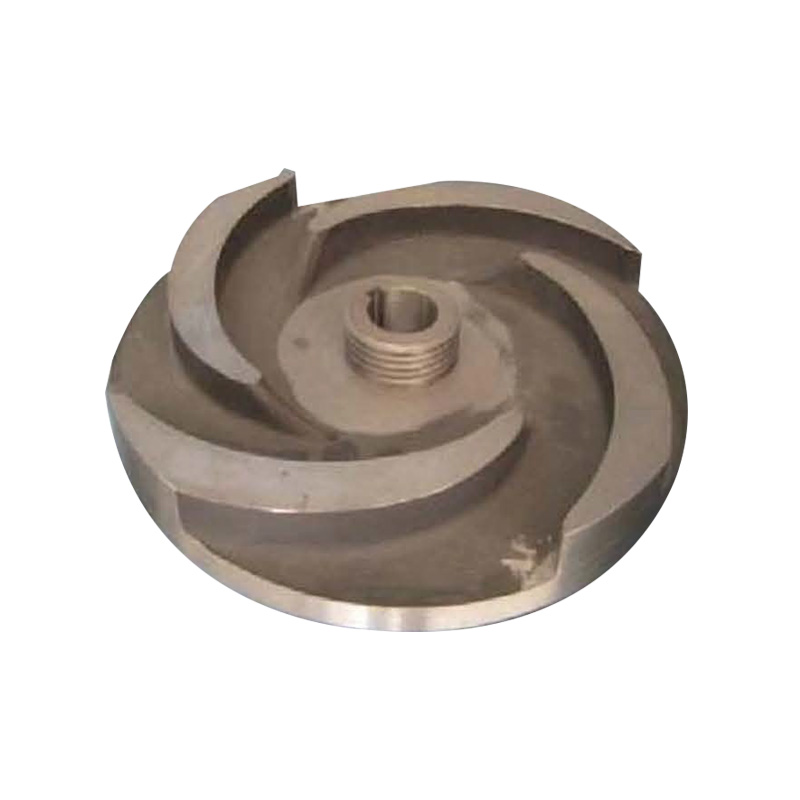
The days of rough, boxy castings with unpredictable performance are long gone. Modern Chinese foundries integrate computational design, precision tooling, and simulation-driven production to create high-efficiency impellers.
Key Design Advances
CFD-Assisted Hydraulic Optimization
Engineers increasingly use Computational Fluid Dynamics (CFD) to refine impeller blade profiles. By analyzing flow patterns, pressure distribution, and turbulence, designers can achieve:
- Reduced Hydraulic Losses: Minimizing energy dissipation due to turbulence improves pump efficiency by up to 15%.
- Optimized Flow Rates: Correct blade angles ensure even distribution, reducing cavitation and improving suction performance.
- Noise Reduction: CFD enables smoother flow paths, lowering operational noise by as much as 5–7 dB, which is critical in HVAC and municipal systems.
3D-Printed Sand Molds
Additive manufacturing has revolutionized mold making. 3D-printed sand molds allow for:
- More complex internal geometries
- Tighter dimensional tolerances
- Reduced trial-and-error cycles during prototype production
This results in impellers that consistently meet design specifications with fewer defects.
Casting Simulation and Quality Assurance
Before any metal is poured, Chinese foundries simulate casting dynamics to predict potential issues such as shrinkage, porosity, or thermal stress. This proactive approach reduces scrap rates and ensures the finished impeller has:
- Uniform wall thickness
- Optimal grain structure
- Minimal residual stress
A senior mechanical design lead at Shanghai Industrial Design Institute explained:
“By combining CFD with advanced casting simulation, we can predict and eliminate shrinkage defects before any physical mold is made. This reduces trial iterations and ensures blade contours deliver optimal energy transfer.”
Real-World Performance Impact
- Energy Efficiency: Optimized blade geometry reduces motor load and operational costs.
- Longevity: Smooth flow paths reduce erosion and wear on the impeller and pump casing.
- Customizability: CFD and precise casting enable impellers to be tailored for specific fluids, flow rates, and industrial requirements.
4. Corrosion & Wear Resistance: Longevity in Tough Conditions
Industrial environments often expose impellers to highly abrasive fluids, aggressive chemicals, varying pH levels, and extreme temperatures. In such conditions, material degradation is a major concern, and poor-quality impellers can lead to equipment downtime, costly repairs, or complete failure. The China iron casting impeller is specifically engineered to withstand these challenges, ensuring long-term operational reliability.
Surface and Alloy Treatments
Alloy Additives
Chinese foundries incorporate specialized alloying elements to enhance resistance against corrosion and wear. Key additives include:
- Nickel: Improves general corrosion resistance and toughness.
- Chromium: Enhances hardness and protects against oxidizing agents.
- Molybdenum: Strengthens the material against pitting corrosion in chloride-rich environments.
These alloying strategies allow the impeller to operate in acidic, alkaline, or saline fluids without significant material loss, extending the service life significantly compared to standard gray iron impellers.
Heat Treatment
Controlled annealing and tempering processes relieve internal stresses from casting and improve mechanical properties. By carefully managing the cooling rate and heat cycles, foundries achieve:
- Reduced micro-fractures
- Enhanced ductility and toughness
- Improved wear resistance under high-speed operation
Empirical Data on Corrosion Resistance
A third-party laboratory study in Guangzhou tested treated and untreated cast iron samples in a simulated industrial fluid environment. Results showed:
- Corrosion reduction of up to 40% in treated samples
- Minimal pitting and surface degradation after prolonged exposure
- Enhanced performance under continuous rotational and abrasive conditions
These figures demonstrate that high-quality China iron casting impellers provide not just strength but also chemical resilience, making them ideal for diverse industrial applications.
Surface Finish and Cavitation Minimization
In addition to metallurgical improvements, a smooth and precisely finished surface is essential to reduce cavitation—one of the most common causes of impeller damage. Cavitation occurs when vapor bubbles form and collapse near the impeller blade, eroding the surface over time.
China iron casting impellers utilize precision mold finishing and post-casting machining to:
- Achieve smoother blade surfaces
- Minimize turbulence and flow separation
- Reduce the likelihood of cavitation and associated energy loss
For example, municipal water pumps fitted with high-quality iron casting impellers have shown a 30–50% reduction in maintenance frequency, thanks to improved surface finishes and wear resistance.
Real-World Industrial Applications
- Chemical Industry: Impellers handle corrosive solvents, acids, and bases with minimal erosion.
- Marine Engineering: Continuous exposure to saline water is mitigated by corrosion-resistant alloys.
- Power Generation: Cooling water impellers experience prolonged exposure to abrasive particulate; ductile iron impellers resist pitting and wear effectively.
5. Scalability & Rapid Delivery for Global Supply Chains
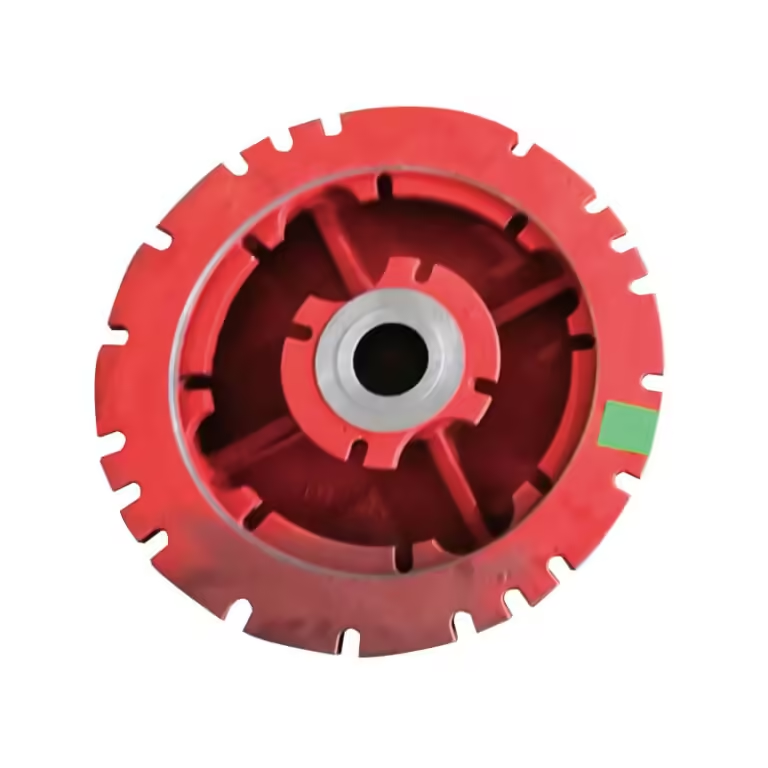
In addition to high-performance characteristics, the China iron casting impeller excels in production scalability and global supply chain responsiveness. Industrial buyers often require rapid delivery of high-quality impellers to avoid costly downtime. China’s manufacturing ecosystem, with its integrated foundries, logistics networks, and ISO-certified production lines, ensures timely availability at both small and large volumes.
Production Capacity Indicators
- China accounts for over 50% of global iron casting volume for industrial components (World Foundry Organization, 2022).
- Hundreds of ISO-certified foundries specialize in fluid machinery, serving OEMs and aftermarket supply chains worldwide.
- Advanced production lines can handle batch sizes from single custom impellers to thousands of units per month, meeting urgent and large-scale demand simultaneously.
Rapid Lead Times and Logistics Advantage
The close proximity of raw material suppliers, casting plants, and logistics providers allows Chinese manufacturers to offer lead times significantly shorter than many Western alternatives. For example:
- Standard impellers can often be delivered in 2–4 weeks domestically and internationally.
- Customized impellers with unique dimensions, blade profiles, or alloy compositions can typically be produced and shipped in 6–8 weeks, depending on complexity.
- Integrated logistics solutions—including sea, air, and rail freight—ensure reliable delivery to global destinations with minimal risk of delays.
Flexibility for Specialized Applications
China iron casting impellers can be customized for challenging and niche applications, such as:
- Subsea pumps operating under extreme pressure
- High-head boiler feed systems requiring precise hydraulic performance
- Wastewater treatment plants handling high solid content and abrasive slurry
This flexibility allows industries worldwide to benefit from high-quality impellers without the long waiting times or high costs associated with local production in other countries.
Industry Insights
According to a 2023 report by Global Pump Manufacturers Association (GPMA):
“Chinese iron casting foundries have rapidly improved process automation and quality control. This enables global buyers to receive large volumes of high-quality impellers in significantly reduced time frames, making China a preferred supplier for critical industrial components.”
Moreover, engineers in the petrochemical and marine sectors note that the reliability and delivery speed of Chinese impellers minimizes downtime, reduces inventory carrying costs, and allows for just-in-time maintenance strategies, which are increasingly essential for global operations.
China Iron Casting Impeller Benefits at a Glance
| Benefit Category | Technical Advantage | Business Impact |
|---|---|---|
| Mechanical Strength | High tensile strength and fatigue resistance | Longer service life |
| Cost Efficiency | Lower total cost of ownership (TCO) | Better ROI |
| Precision Design | CFD optimized blades and tight tolerances | Higher efficiency |
| Corrosion/Wear Resistance | Alloying & treatments | Reduced maintenance |
| Delivery & Scalability | Large-scale production and logistics | Faster fulfillment |
Industry Use Cases: Industrial Adoption Trends
Water & Wastewater Management
Municipalities increasingly install pumps with optimized iron casting impellers to handle solids-laden effluent. Industry surveys report 10–20% energy savings in systems that adopt modern impeller designs.
Marine and Power Generation
Heavy-duty impellers are critical in cooling circuits and ballast systems. In these high-cycle environments, corrosion resistance delivers measurable uptime improvements.
Petrochemical Processing
In corrosive flow streams, China iron casting impellers demonstrate superior erosion resistance, which is critical for maintaining process reliability.
Expert Perspectives
Professor Li Huamin, Head of Fluid Machinery Research at Beijing Institute of Technology, notes:
“Impeller design has moved from artisanal craftsmanship to computationally optimized, data-driven engineering. Chinese foundries are adopting these technologies rapidly and delivering results that can compete with the best in the world.”
The American Pump Manufacturers Association (APMA) also acknowledged:
“Global manufacturers increasingly source impellers from China due to improved QA/QC methods and adherence to recognized standards such as ISO 9001 and API specifications.”
Conclusion
The China iron casting impeller is far more than a commodity part. It represents a strategic choice that blends strength, precision, longevity, and affordability. From rigorous metallurgical processes to design innovation and supply chain responsiveness, Chinese manufacturing capabilities offer real, measurable benefits to global industries.
For engineering teams and procurement leaders aiming to balance performance with cost, choosing the right impeller is pivotal. China’s foundries have advanced to a level where they can deliver high-performance components that meet or surpass global expectations.
FAQ
Q1: What standards do China iron casting impellers comply with?
A1: Many manufacturers adhere to ISO 9001, API 610 / ISO 13709 (for pumps), ASTM material specs, and customer-specific quality requirements.
Q2: How is China iron casting impeller tested before delivery?
A2: Quality tests often include X-Ray inspection, pressure testing, metallographic analysis, and dynamic balancing.
Q3: Are these impellers customizable?
A3: Yes, foundries can tailor dimensions, blade count, surface treatment, and materials to specific industrial needs.
Q4: How do these impellers compare in energy efficiency?
A4: CFD-optimized designs can improve pump efficiency by up to 15% compared to older or poorly designed impellers.
Q5: Is delivery to international buyers reliable?
A5: Yes, China’s logistics infrastructure supports sea, air, and rail shipping, often reducing lead times relative to competitors.
Product Categories
- Valve Parts
- Water Pump Parts
- Bearing Box Parts
- Die Casting Parts
- Stainless Steel Pump Products
- Cast Iron Pump Products
- Valve Parts For Automobile Use
- Auto Parts
- Valve Parts For Civil Use
- Vacuum Pump Parts KF

 English
  Spanish
  Arabic
  Malay
Malay  German